The coast / Le littoral
Kribi and the Lobé falls
Pale sand, fishing canoes and a river that tumbles over rocks straight onto the beach: Kribi is Cameroon's favourite seaside town, and the Lobé falls are its best-known sight.
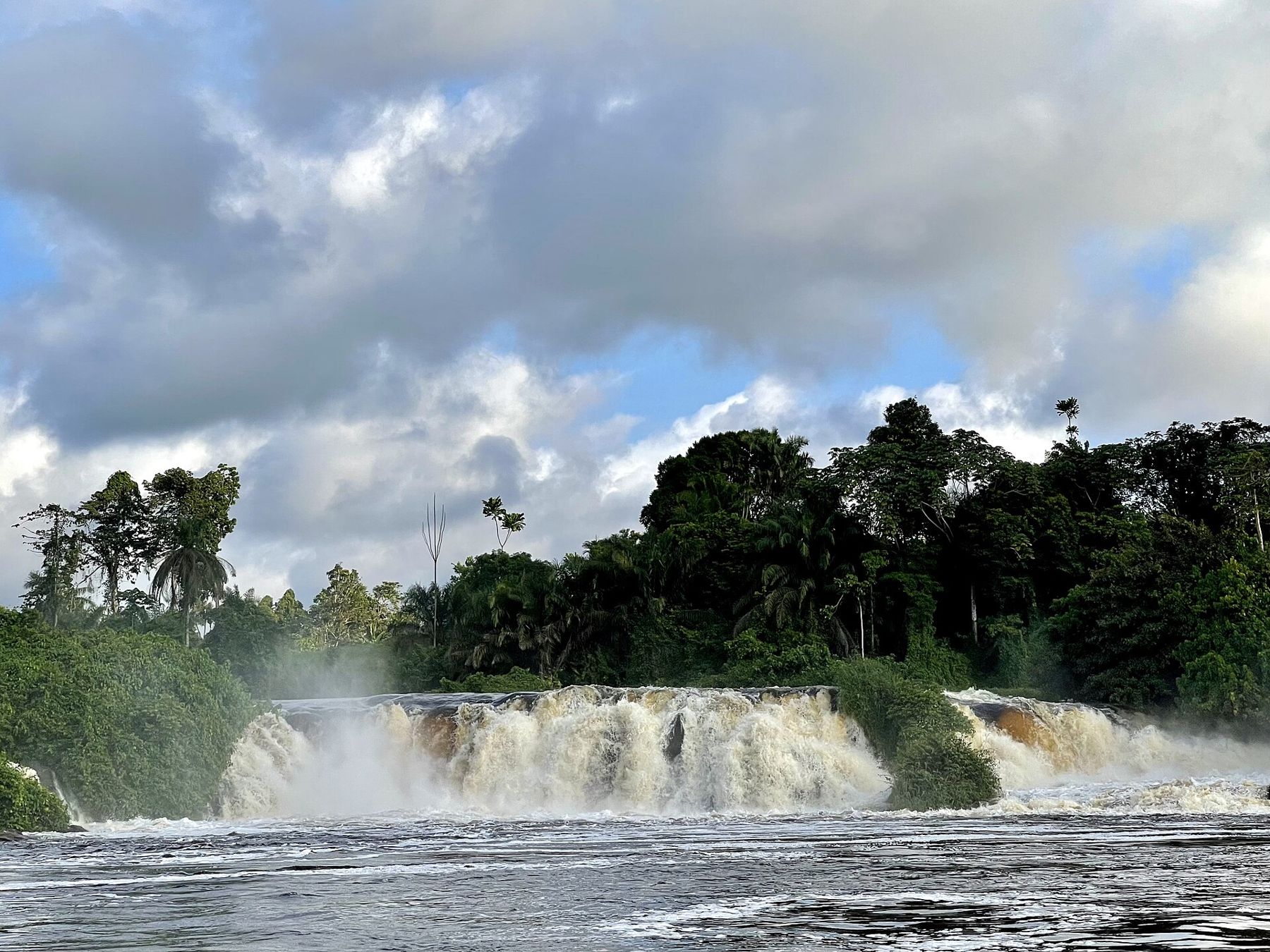
Kribi is where Cameroonians go to the seaside. The town stretches along the Gulf of Guinea in the South Region, with long beaches of pale sand, coconut palms, fishing canoes pulled up under the trees and a steady smell of fish on the grill. A few kilometres south, the Lobé river reaches the ocean by falling over a broad band of rocks straight onto the beach, a sight found in very few places in the world.
Watching them land is one of the simplest pleasures of a stay.
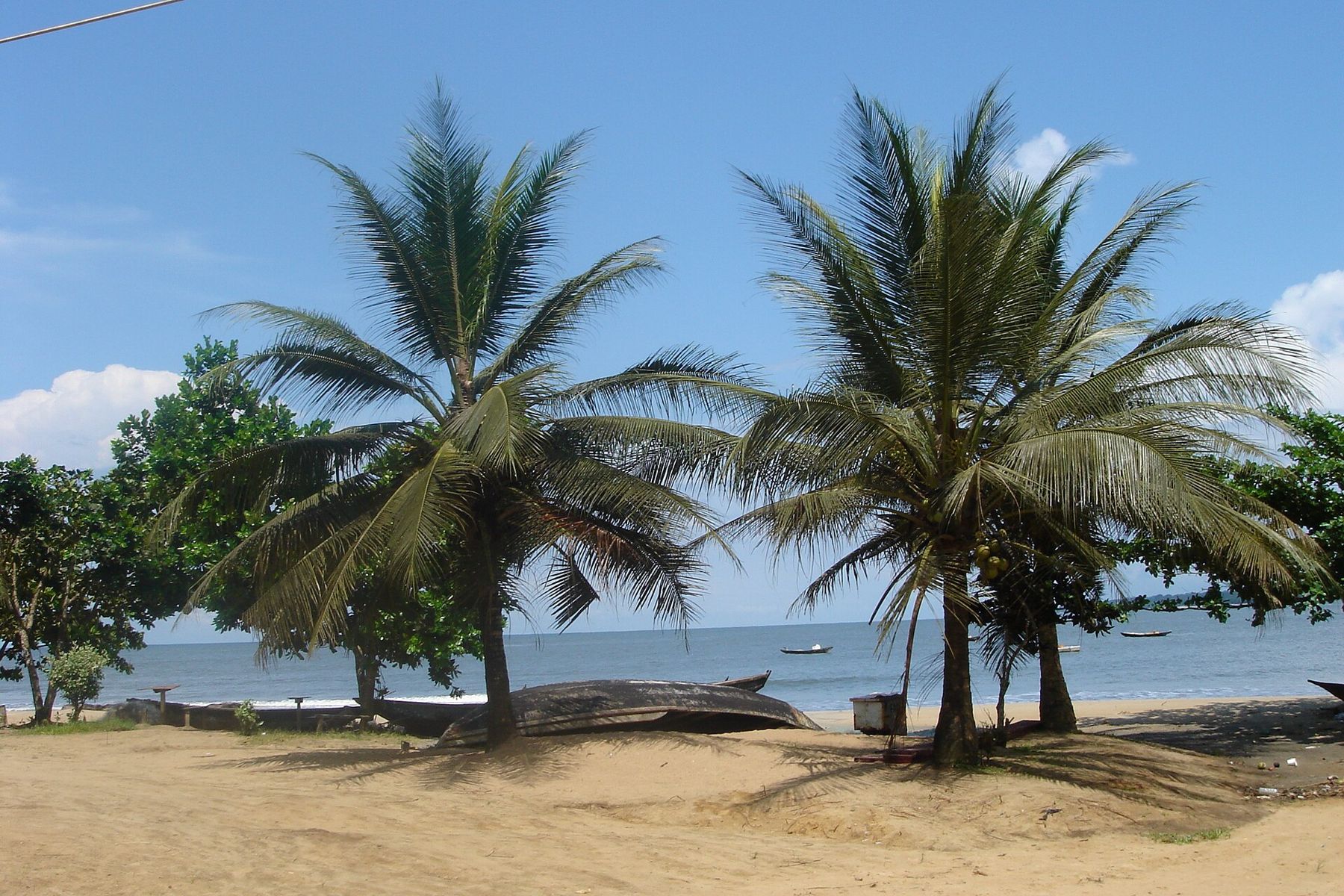
A beach town on the Gulf of Guinea Une ville balnéaire sur le golfe de Guinée
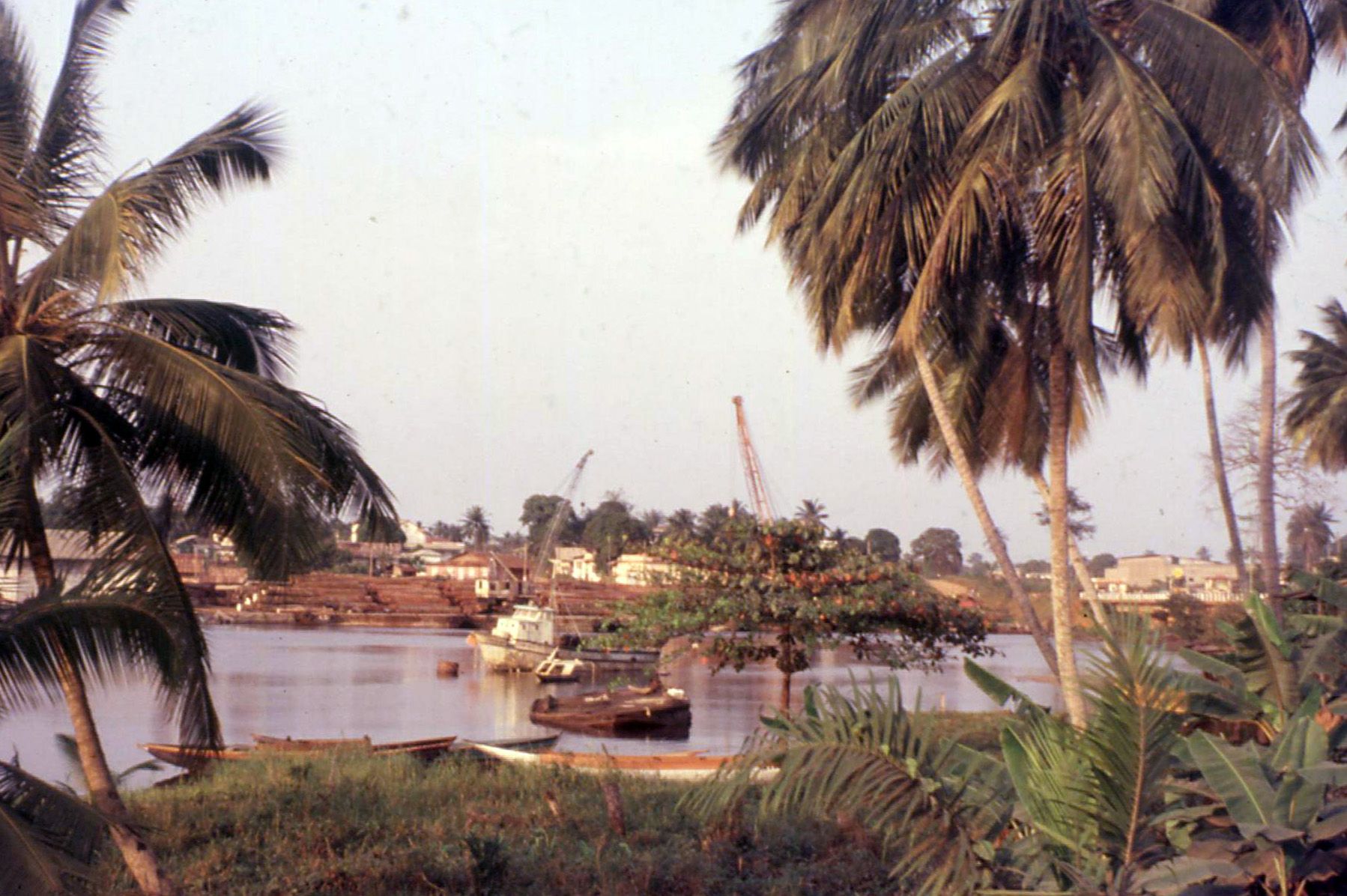
Kribi grew as a trading post at the mouth of the Kienké river, and in the colonial period it exported timber, rubber and cocoa from the forest inland. Today it is a mix of fishing town, regional market and holiday resort. At weekends and in the school holidays, families from Douala and Yaoundé fill the beaches; on weekdays outside the holidays, many stretches are almost empty.
The town centre is compact and easy to walk, with a busy market, a small harbour where the Kienké meets the sea, and streets of low houses shaded by mango trees. Beyond the centre, the beach road runs south past villas and guesthouses towards the falls, and north towards quieter coves where the forest comes down almost to the sand.
The sand here is lighter than on the volcanic coast around Limbe and Mount Cameroon, and the water is usually warm. That does not mean it is always calm. Currents can be strong, waves break hard on some beaches, and lifeguards are rare. Ask locally before swimming, stay within your depth and keep children close.
Malaria is present along the whole coast, as across Cameroon, so take medical advice on prevention before you travel, use repellent in the evenings and sleep under a net where one is provided. Drink bottled or treated water, and take the equatorial sun seriously: a hat and sunscreen matter even on hazy days.
The Lobé falls Les chutes de la Lobé
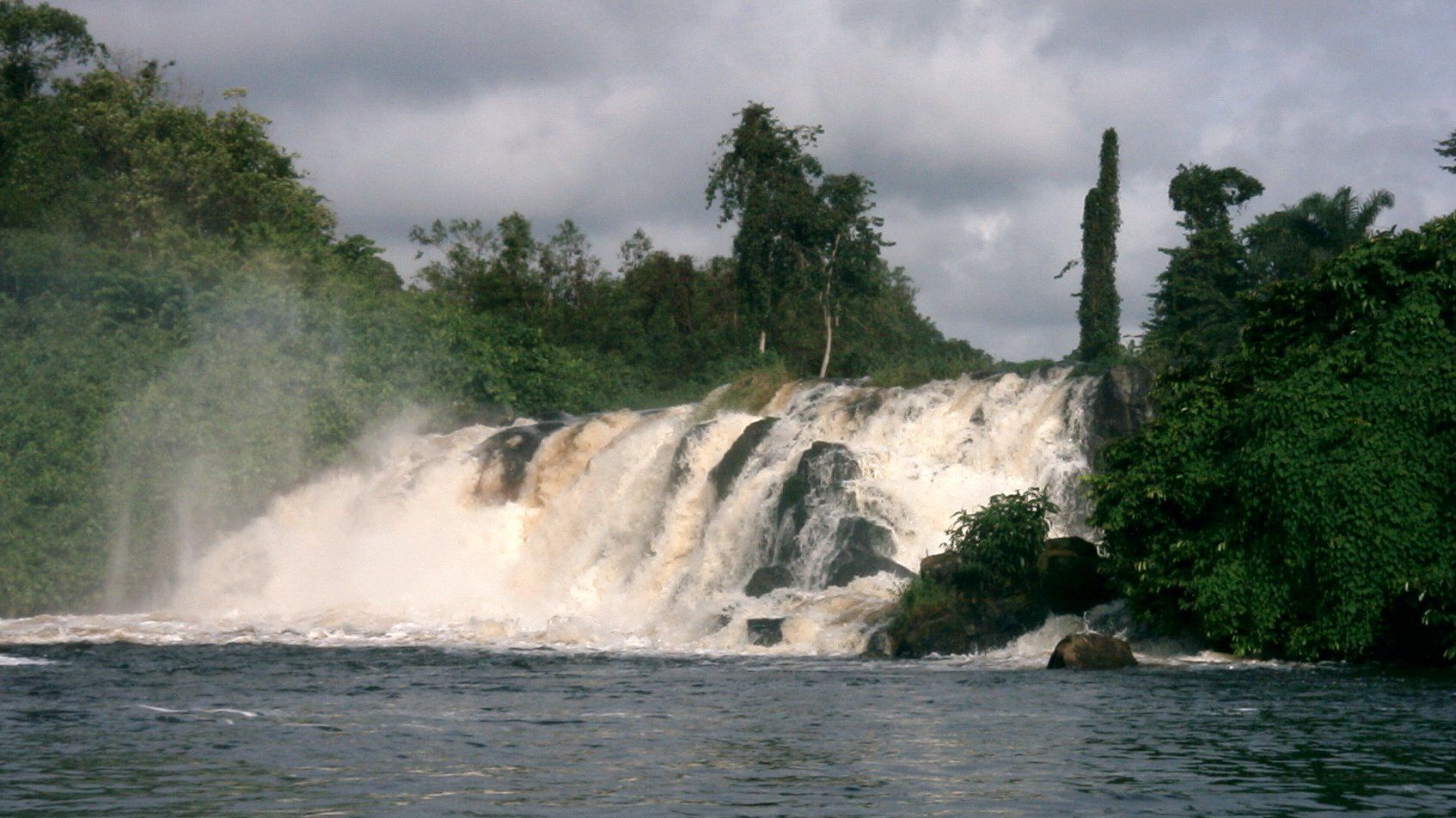
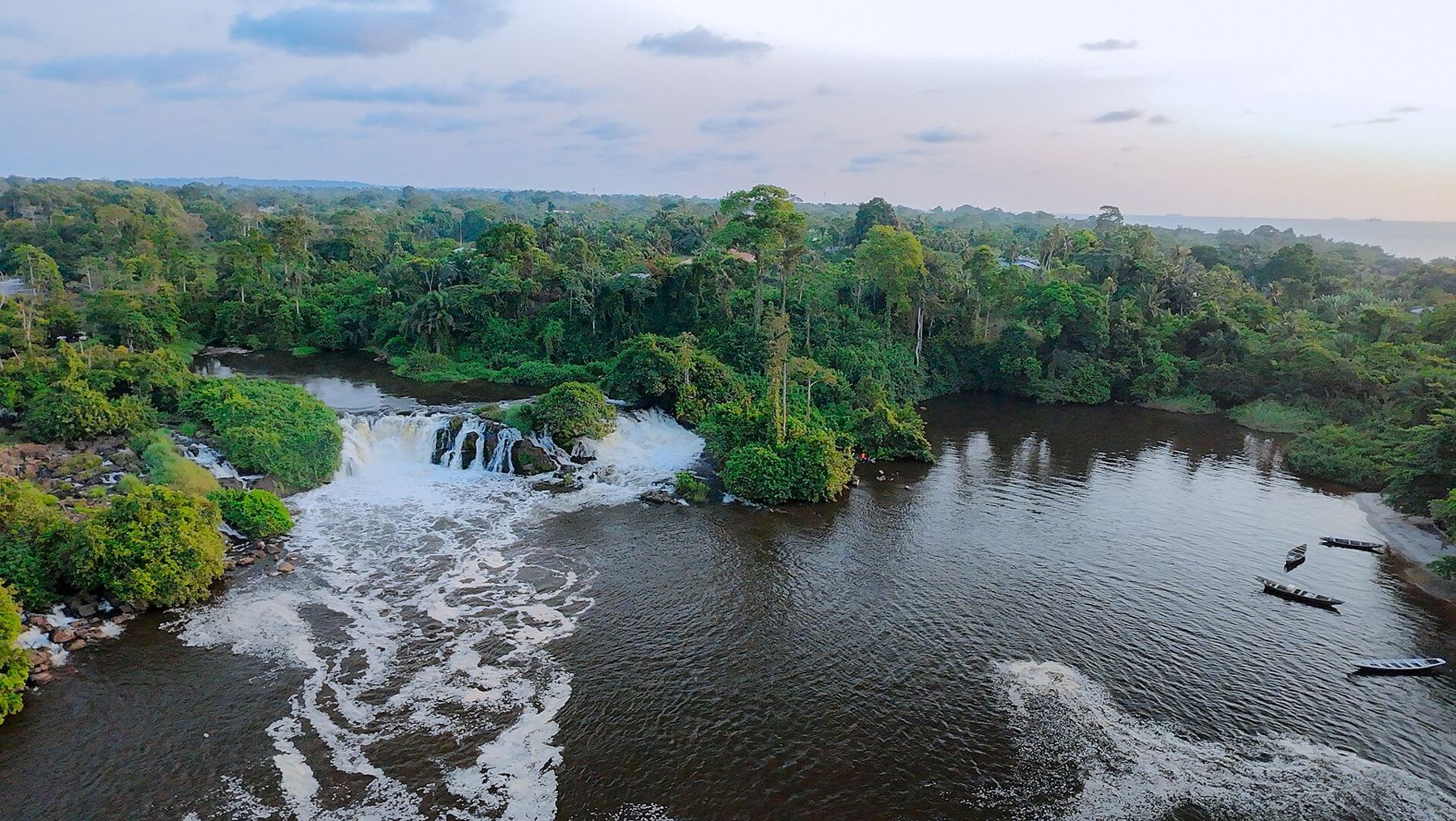
The Lobé falls lie a short drive south of the town centre. The river spreads out into several channels through the forest, then drops over a wide shelf of dark rock in a series of white cascades that end on the sand and run into the sea. In the rainy months the falls are loud and brown with mud; in the dry season they split into separate streams and the rocks show.
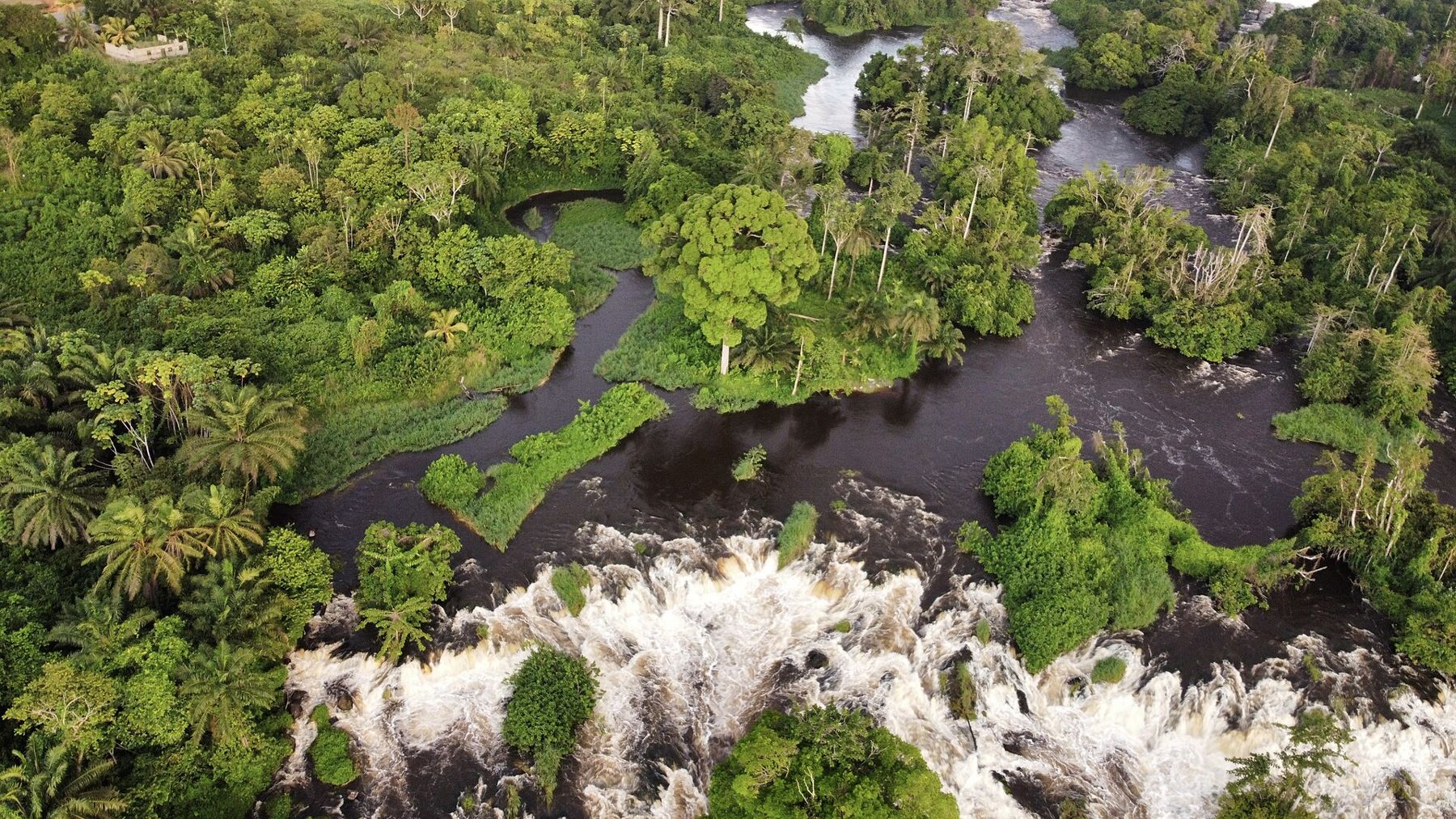
You can walk along the beach to the foot of the falls, and local boatmen offer pirogue trips across the pool below and a short way upriver into the forest. Agree the price and the length of the trip before you set off, and ask for a life jacket. The rocks are slippery and the current at the base of the falls is strong, so do not swim close to the cascades, however inviting the pools look.
There is often a small fee for access to the site or for parking, collected by the local community. Fees and arrangements change, so check before you go.
Fishing boats and grilled fish Pirogues et poisson braisé
Early in the morning, the fishing canoes come back through the surf and the catch is sold on the beach and at the fish market near the town centre. Some boats carry outboard motors; others are still paddled. Watching them land is one of the simplest pleasures of a stay.
The fish ends up on charcoal grills all along the coast. Poisson braisé, a whole fish seasoned with garlic, ginger and herbs and grilled slowly, is the classic dish, served with fried plantain, cassava sticks or chips and a fiery pepper sauce. Prawns and other shellfish are popular too. For the dishes and how to order them, see the guide to eating in Cameroon. Prices depend on size, so agree before the fish is cooked.
The Batanga coast La côte batanga
The coast around Kribi is home to the Batanga people, one of the coastal groups whose life has long turned on fishing and the sea. North of town, fishing villages such as Londji sit on quieter bays, and south of the falls the road continues past small settlements towards the border area with Equatorial Guinea.
Further south, the coast and forest of Campo meet at the village of Ebodjé, where community programmes protect nesting sea turtles; see Ebodjé and Campo Ma'an if you want to continue in that direction. Travel there takes more planning, as roads and transport become rougher.
Village life along this coast follows the sea and the weather. Nets are mended in the shade, canoes are repaired on the sand, and children play in the shallows after school. Ask before photographing people, especially fishermen landing their catch, and if someone has given you their time, buying a fish or a drink is a natural way to say thank you.
A port town growing fast Un port en pleine croissance
Kribi has changed quickly. A deep-water port south of the town opened in the late 2010s, and with it came new roads, new building and heavy trucks. Some beaches near the port area have lost their quiet, while others north of town are much as they were. If you want a peaceful stretch of sand, ask where the new construction is and head the other way.
The growth has brought better roads and more places to stay, so Kribi is easier to reach than it once was. It has also brought rising prices and pressure on the fishing grounds and the coastal forest, issues that local people discuss openly.
Getting there and getting around Y aller et se déplacer
Kribi is reached by tarred road from Douala through Edéa, a journey of a few hours depending on traffic, and from Yaoundé by road as well. Buses and shared taxis run on both routes; travel by day and expect police checkpoints along the way. In town, motorbike taxis and shared taxis cover short distances.
The driest and sunniest months are usually December to February; the long rains fall later in the year, when the falls are at their strongest but the beaches are less inviting. French is the main language here, and English is less widely spoken than in the Southwest. Carry cash in CFA francs, as cards are accepted in few places, and check visa and health requirements, including the yellow fever certificate, before you travel.