The southern forest / La forêt du Sud
Yaoundé, the city on seven hills
Cameroon's capital spreads over green hills in the Centre region, quieter than Douala, with a hilltop monastery, a spiral monument to reunification and a national museum in a former palace.
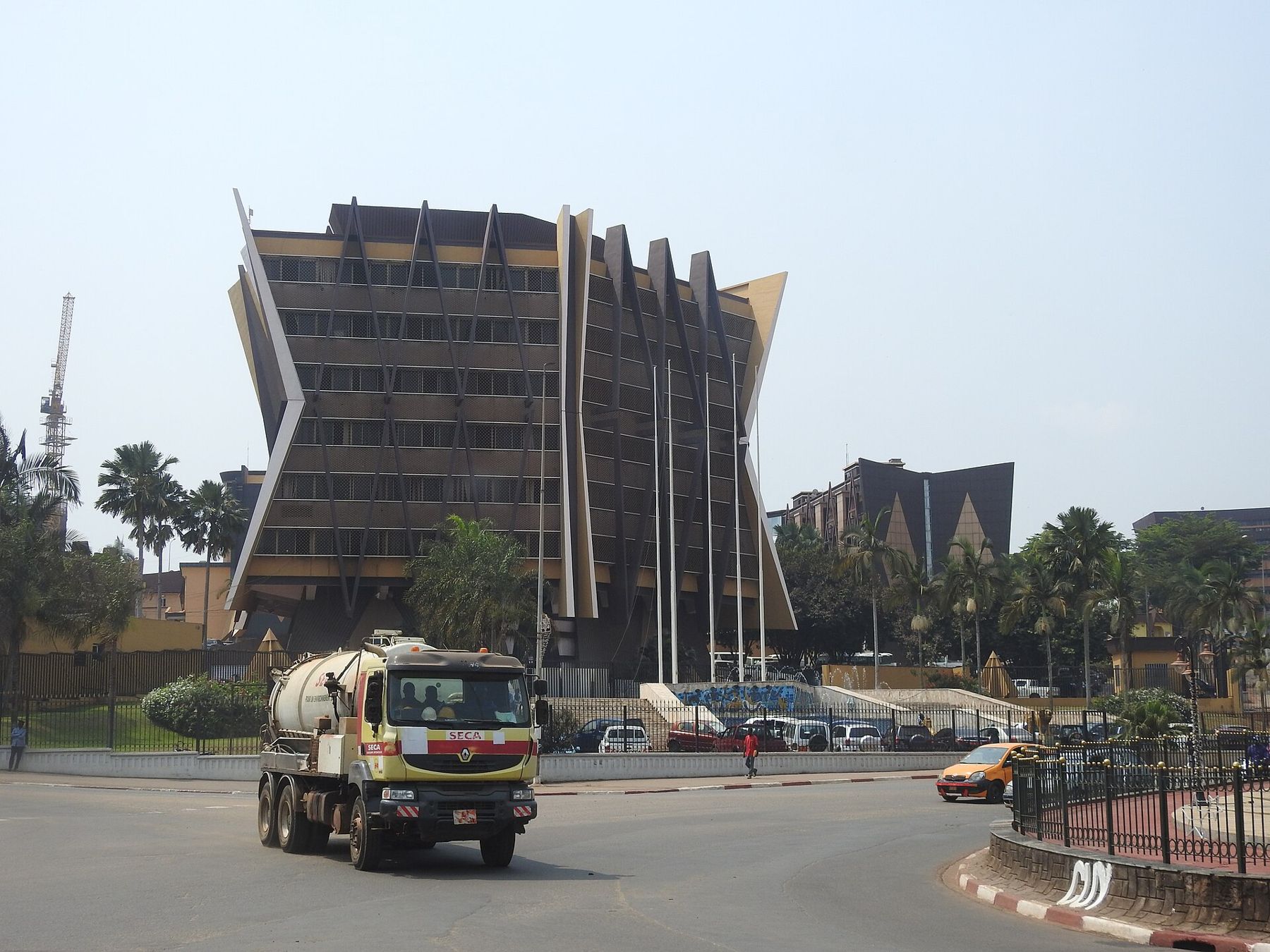
A capital on hills Une capitale sur des collines
Yaoundé grew from a German post founded in the late 1880s, during the years of German Kamerun, on high ground between the coast and the savanna. The French made it the capital of their mandate territory after the First World War, and it stayed the capital at independence in 1960 and after reunification with the formerly British Southern Cameroons in 1961. Today it is the seat of government, the home of ministries, embassies and universities, and a city that climbs up and down a ring of forested hills.
The nickname, the city of seven hills, is loose rather than exact: you see more than seven ridges from any high point, and neighbourhoods fill the valleys between them. The altitude, a little over 700 metres in the centre, takes the edge off the heat you feel in Douala, and evenings can be pleasantly cool. French is the language of the street, the offices and the taxis, though you hear many Cameroonian languages, and English speakers from the Northwest and Southwest are part of the city.
Compared with the port city on the coast, which you can read about in the working port city story, Yaoundé feels administrative and green. Tall office blocks with bold, angular designs stand near roundabouts planted with palms, and the government quarter has wide avenues that are rare elsewhere in the country.
Mont Fébé and the view Le mont Fébé et la vue
Mont Fébé rises on the northern edge of the city and is the easiest place to understand the layout. A road winds up through trees to the summit area, where you look south over the roofs, the hills and the haze of the valley. Go early in the morning or late in the afternoon, when the light is softer and the air clearer, and avoid the hottest part of the day.
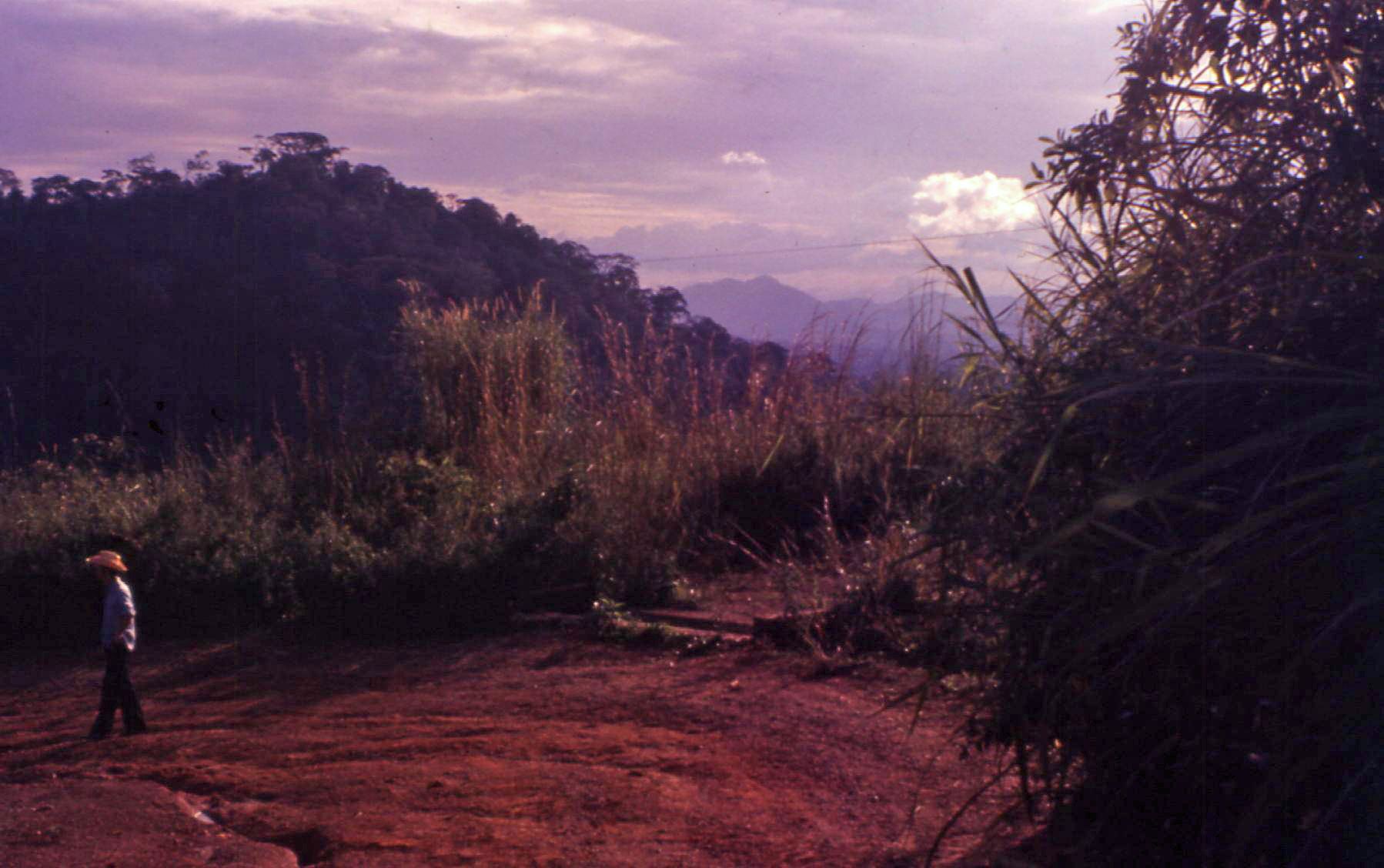
On the slopes of Mont Fébé stands a Benedictine monastery, and within it a museum of Cameroonian art with masks, carvings, bronze work and objects from many regions. It is a calm place, so dress modestly and keep voices low. Opening hours and entry fees change, so check before you go and carry cash.
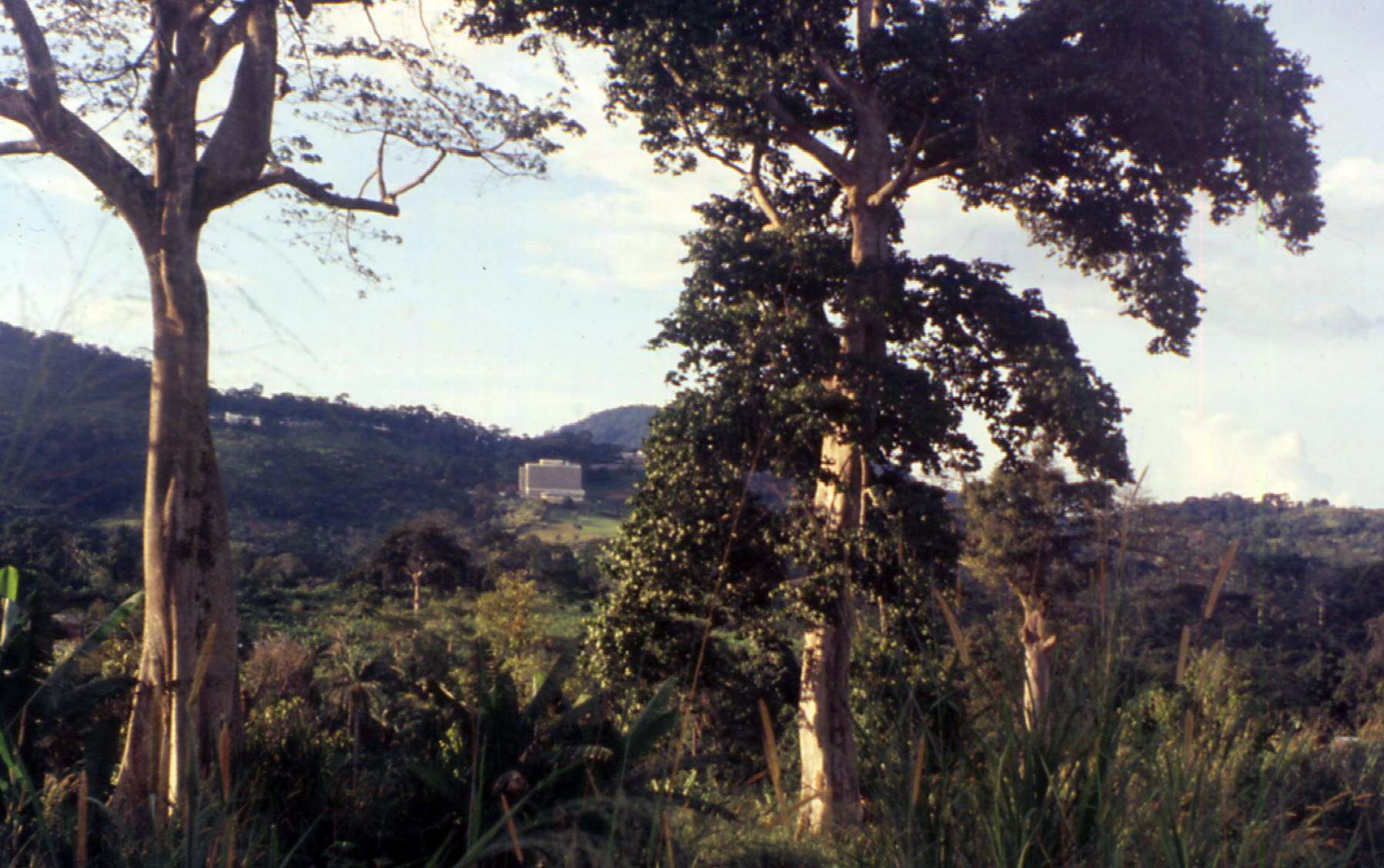
The hill is also a good place to see the forest that once covered this part of the Centre region. Tall trees with pale trunks still stand on the steeper ground, and in the rainy months the whole view turns a deep green.
The Reunification Monument Le monument de la Réunification
The Reunification Monument commemorates the joining of the former French and British territories in 1961. Its design is a spiral ramp that winds up around a central column, with sculpture and reliefs that refer to the two parts of the country coming together. You can walk the ramp and look out over the surrounding streets.
The monument helps explain a country that still speaks of itself as bilingual, with French and English as official languages. The history and the two languages shape how you travel here: road signs, menus and conversations are mostly in French in Yaoundé, while English dominates in the two western regions.
Detour / détourFoumban and the Bamum sultansMuseums and the city centre Musées et centre-ville
The National Museum occupies a former presidential palace in the centre. Its rooms trace the country from the earliest settlement to the colonial period and independence, with displays on the kingdoms and chiefdoms of the west, the peoples of the forest and the north, and the political history of the twentieth century. It is a good first stop before you travel, especially if you plan to visit the palaces of the Grassfields, such as the one described in the chiefdoms of the Bamileke plateau.
The city centre is compact enough to walk in parts. The central market is crowded, loud and full of fabric, household goods, fruit and spices; the Mokolo market, west of the centre, is larger still. Keep valuables out of sight, carry small notes and agree prices before you buy. Bargaining is normal and is usually good-humoured.
A small municipal lake sits below the government quarter, and the streets around it are pleasant in the late afternoon. Avoid photographing ministries, military buildings, police and the presidential palace, which lies on a hill to the north at Etoudi. Security staff take this seriously, and a camera pointed in the wrong direction can lead to a long conversation and a deleted memory card.
Getting around Se déplacer
Most people move around Yaoundé in shared yellow taxis. You stand at the roadside, call out your destination as one passes, and the driver nods or drives on. Fares are per seat on fixed routes and higher if you take the whole car, which you can do by asking for a drop, sometimes called a "dépôt". Motorbike taxis are everywhere on the edges of the city; they are quick but involved in many accidents, so if you use one, insist on a helmet.
Nsimalen International Airport lies to the south of the city, a drive that takes longer than the distance suggests when traffic is heavy. A railway links Yaoundé with Douala and runs north to Ngaoundéré, a long journey covered in the Adamawa plateau story. Intercity coaches leave from company depots spread across the city rather than from one central station, so ask where your coach departs from the day before.
Practical notes Conseils pratiques
The south of Cameroon has two rainy seasons and two drier ones. The long dry season, roughly December to February, is the most comfortable time for a visit; July and August are often drier too, though skies stay grey. Heavy afternoon storms are common in the wet months and can flood low streets quickly.
Carry your passport or a certified copy, as identity checks happen. Use bank cash machines in daylight, inside a branch where possible. Drink bottled or treated water. Cameroon's security situation varies by region, and conditions change: before you travel anywhere in the country, read your government's current travel advice.