The Grassfields / Les hauts plateaux
The chiefdoms of the Bamileke plateau
On the green hills around Bafoussam, Bamileke chiefdoms keep their great thatched houses, carved pillars and royal collections. Bandjoun is the best known, and a visit there rewards good manners.
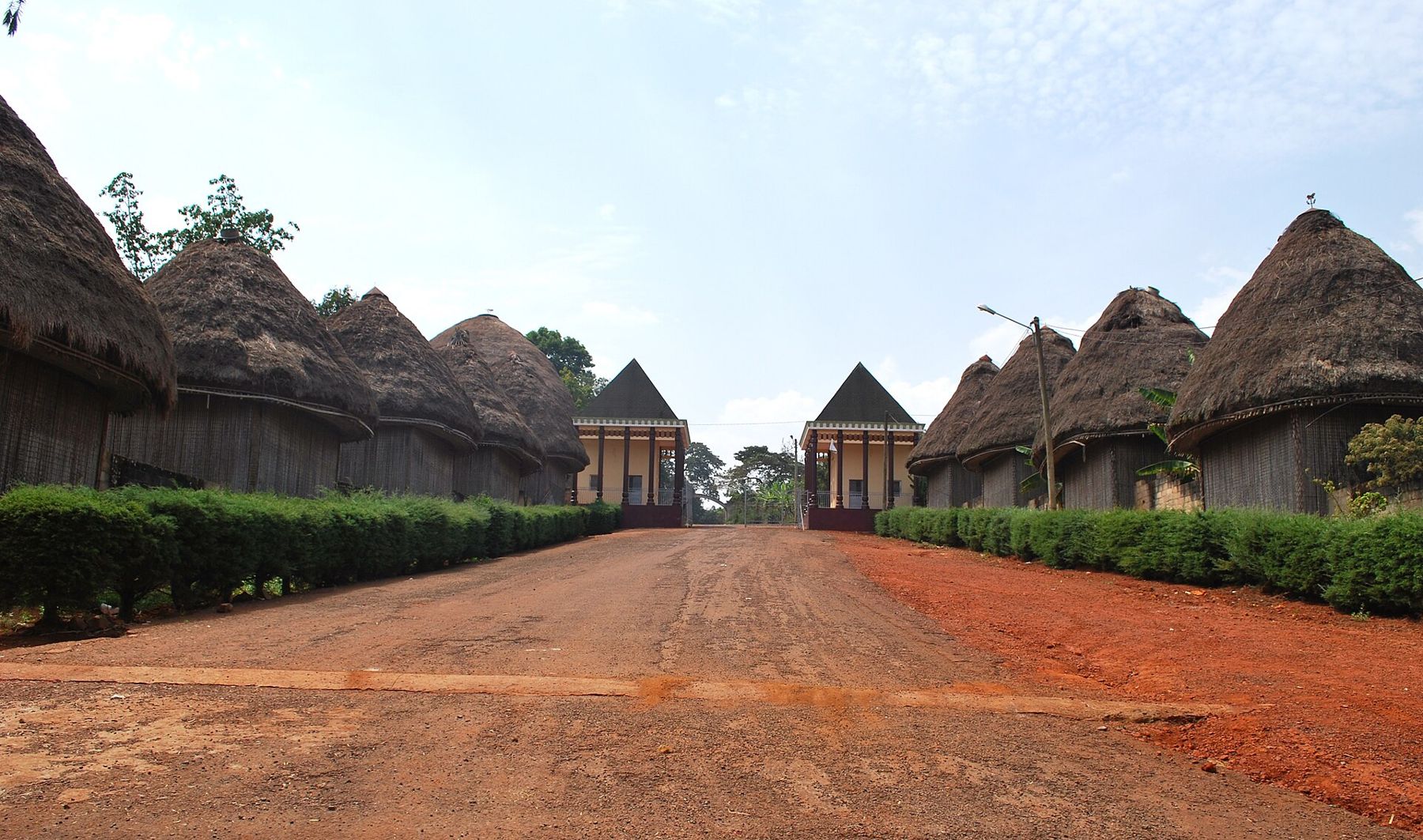
The West Region of Cameroon is a high, fertile plateau of hills and valleys, intensely farmed and densely settled. It is the homeland of the Bamileke peoples, organised for centuries into many separate chiefdoms, each with its own ruler, council and royal compound. Several of these chiefdoms welcome visitors, and Bandjoun, close to the regional capital Bafoussam, is the most famous.
The plateau of the chiefdoms Le plateau des chefferies
A Bamileke chiefdom, or chefferie in French, is both a territory and an institution. At its centre is the chief, known by local titles such as fo, who is a political leader, a guardian of tradition and a figure with ritual duties. Around the chief are councils of notables, societies responsible for different aspects of community life, and families whose rights and duties go back generations.
The chiefdoms survived the German and French colonial periods, and they remain important today. Many Bamileke people live and work in Douala, Yaoundé and abroad, yet they return home for funerals, festivals and family occasions, and they often contribute to the upkeep of their chiefdom.
The landscape reflects this dense, settled life. Fields of maize, beans, cocoyams and plantains climb the hillsides, family compounds are scattered among them, and every scrap of good land seems to be farmed. Bafoussam, the regional capital, is a busy commercial town and the natural base for visiting the chiefdoms around it.
Bandjoun and its great house Bandjoun et sa grande case
The royal compound at Bandjoun is one of the most impressive in the region. A long avenue leads past rows of houses with high conical thatched roofs towards the great house, a tall building with a square plan, walls of bamboo and a huge thatched roof that rises to a point. Its front is lined with carved wooden pillars, and the scale of it is hard to grasp from photographs.
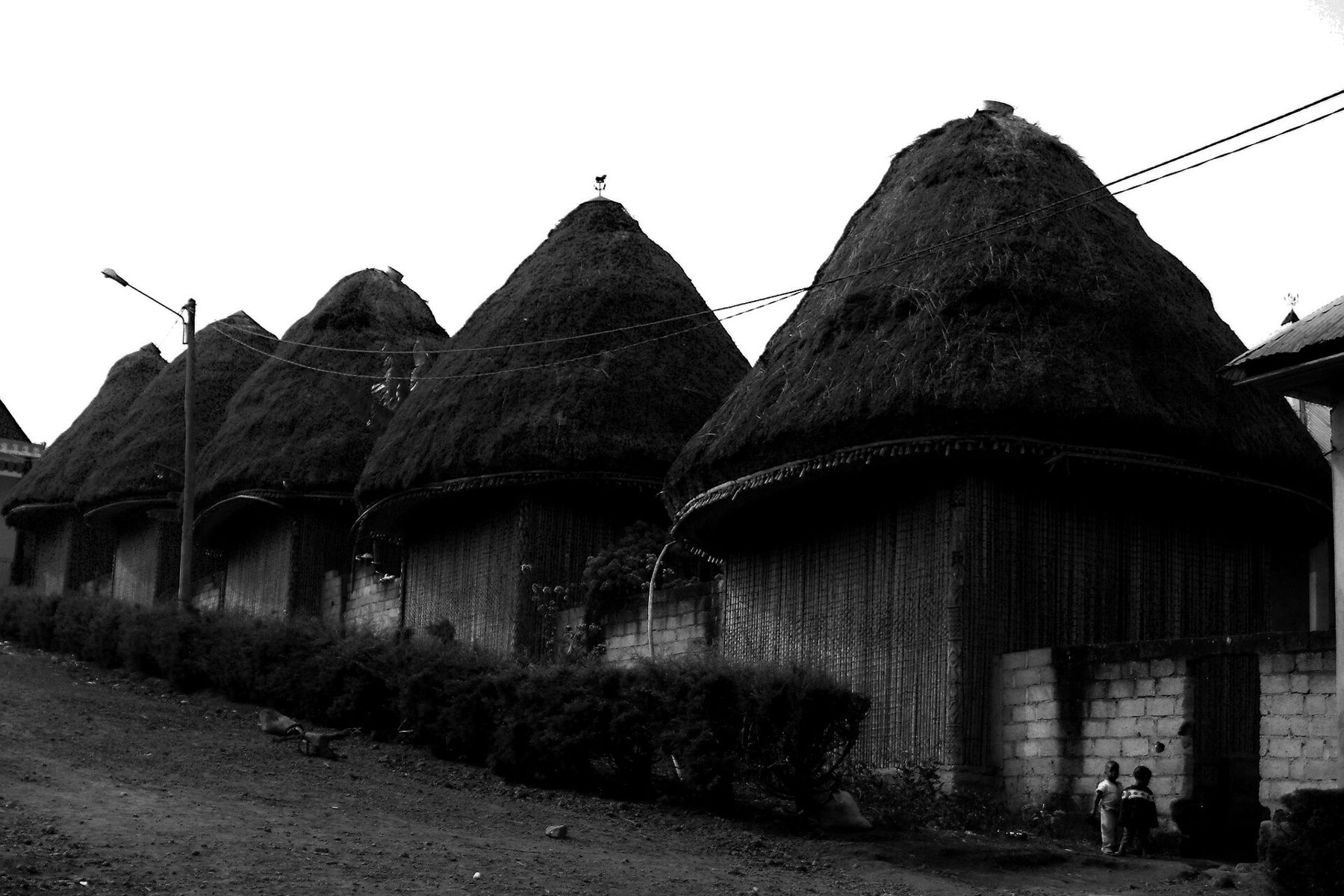
Building and repairing a great house is a community task, using techniques and materials passed down over generations. Some of these buildings have been damaged by fire over the years and rebuilt, which is part of their story rather than a loss of authenticity.
Carved pillars and royal collections Piliers sculptés et collections royales
The carved pillars of the great houses show figures of people, animals and symbols linked to the chiefdom and its history: rulers, warriors, mothers, leopards and other emblems of power. Inside the compounds, many chiefdoms keep collections of royal objects such as stools, masks, beaded figures, musical instruments, cloth and weapons. Some chiefdoms have set up museums to display them and to explain their meaning to visitors and to their own young people.
The same visual world appears in the beadwork, masks and indigo cloth of the region, covered in Ndop cloth and the crafts of the Grassfields. To the east, Foumban and the Bamum kingdom shows a related but distinct royal tradition.
Detour / détourFoumban and the Bamum sultansHow a chiefdom works Le fonctionnement d'une chefferie
Visiting a chiefdom is not like visiting a monument. It is a living institution, with a chief and a court still in place. Some parts of the compound are open to visitors, while others are reserved for the chief, his family, the notables or particular societies. Sacred groves and shrines are often closed to outsiders entirely. A guide from the chiefdom will show you what you may see and explain what you may not.
Chiefdoms also act as places of justice, mediation and ceremony for their communities. On some days you may arrive to find a meeting, a funeral rite or a ceremony under way; in that case, the visit may be shortened or postponed.
It helps to arrive in the morning, when the person who receives visitors is more likely to be available. Be patient: a visit may begin with a greeting, an explanation of the chiefdom's history and a wait before the tour starts.
Etiquette for visitors Les règles de politesse
Good manners matter more here than anywhere else on a trip to Cameroon. Announce yourself on arrival and greet the chief's representative or the person who receives visitors before you start looking around. Ask permission before taking any photographs, of buildings or of people, and accept a refusal without arguing. Never sit on a seat that may be reserved for the chief or the notables.
There is usually a fee for a visit and for the museum, and sometimes a separate charge for photography. Ask about it openly at the start, pay it at the place where it is collected, and keep small notes for the purpose. If you are received by the chief, a small gift is a courteous gesture; ask your guide what would be appropriate. Dress modestly and keep your voice low in the compound.
Markets, funerals and festivals Marchés, funérailles et fêtes
Funerals are among the most important events in Bamileke life. Often held months or even years after a death, they can last several days and bring together hundreds of people, with dances, masks and music. They usually take place in the dry season, from about November to March. If you are invited, it is an honour; dress respectfully and follow your hosts' lead.
The markets of the plateau, held on a cycle of local market days, are busy with farmers selling vegetables, fruit, palm oil and livestock. The region's roads are among the best in the country, and the chiefdoms combine well with a trip to Foumban or to the highlands of the Northwest, if the security situation allows. See planning a trip to Cameroon for visas, health rules and current travel advice.