The Grassfields / Les hauts plateaux
Ndop cloth and the crafts of the Grassfields
Deep blue cloth with white patterns marks royal courts, dances and funerals across Cameroon's highlands. Learning how ndop is made, and how to buy it fairly, adds depth to any visit.
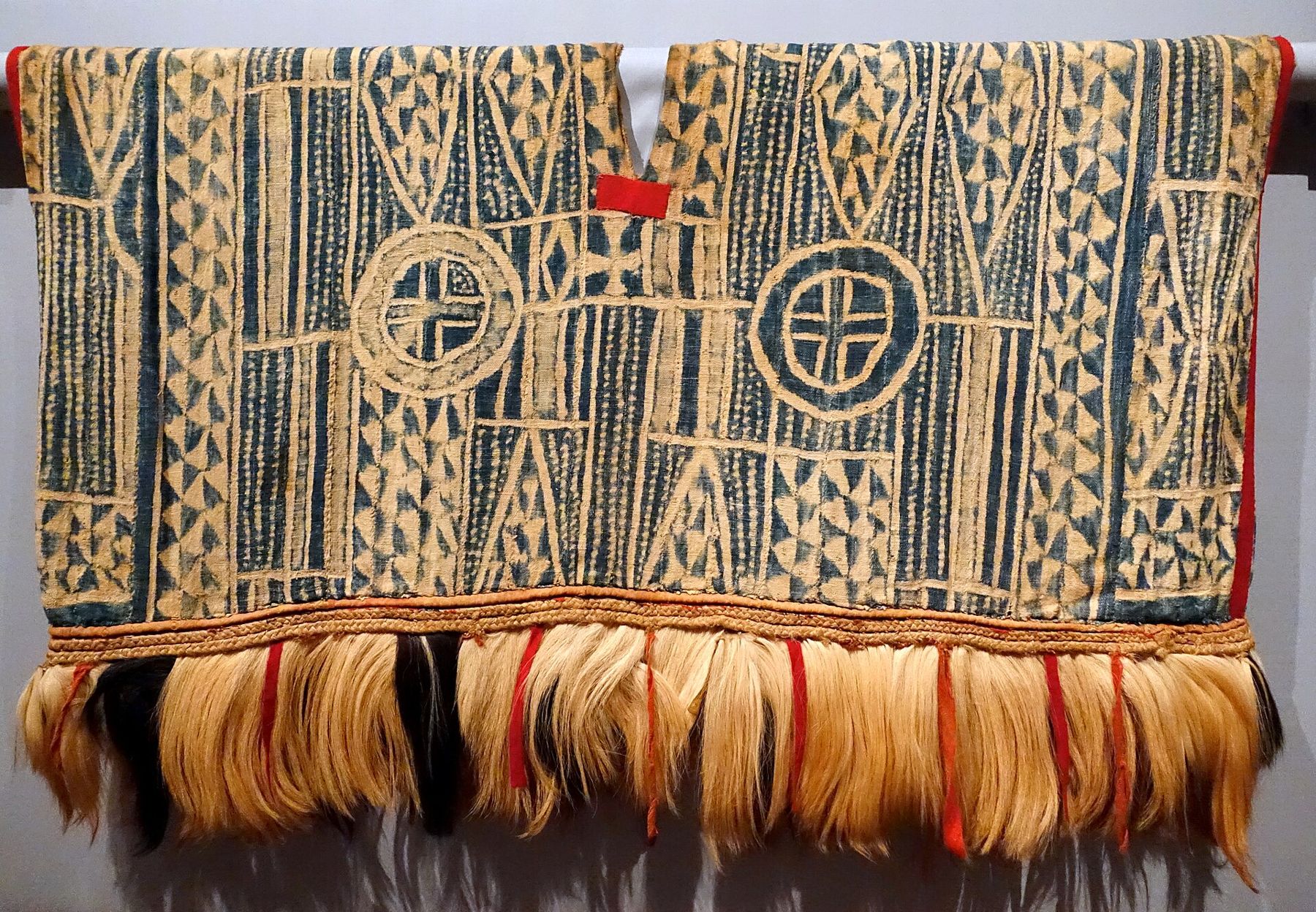
Across the Grassfields of western Cameroon, one cloth stands out at every important occasion: ndop, a cotton textile dyed deep indigo blue and covered in white patterns. It hangs behind the seats of chiefs, wraps dancers at funerals and festivals, and is worn by notables on ceremonial days. Alongside it, the region's masks, beaded objects and carvings make up one of the richest craft traditions in Africa.
An indigo cloth of the Grassfields Un tissu indigo des Grassfields
Ndop is a resist-dyed cloth. Its base is made of narrow strips of cotton, woven on small looms and then sewn together into a large panel. The white patterns are produced by protecting parts of the cloth from the dye, so that they stay pale when the rest of the panel turns blue.
The cloth has long travelled along trade routes. Much of it was historically woven and dyed by specialists in the north of the country and the wider region, then traded south to the Grassfields, where its meaning and use took shape at the courts of chiefs and kings. Today, cloth is produced in several places, and ndop-style prints made in factories are common too.
Indigo itself comes from plants whose leaves are fermented to make the dye. The process is slow and skilled, and the depth of blue depends on how many times the cloth is dipped and aired. Older hand-dyed cloth often shows a slightly uneven colour, with darker and lighter patches, which is part of its appeal and a sign of handwork.
How the patterns are made Comment naissent les motifs
Before dyeing, the patterns are drawn on the cloth and then stitched tightly with raffia thread, gathering and binding the fabric along the lines of the design. The bound cloth goes into the indigo vat, often several times, to reach a deep blue. When the threads are cut away, the protected areas appear as white lines, circles, triangles and stripes.
The designs carry names and meanings: some refer to animals such as the spider, the frog or the lizard, others to objects, places or ideas linked to power and protection. The meaning can vary between communities, so the best way to learn is to ask the maker or the seller what a particular pattern represents.
Stitching a large panel by hand can take weeks of work before the cloth ever reaches the dye. That labour is the main reason a well-made piece costs what it does, and why it is treated with care by the families and courts that own it.
Where the cloth is worn Où l'on porte le tissu
In the chiefdoms and fondoms, ndop belongs to the world of the court. Large panels are hung as backdrops for ceremonies and enclose spaces reserved for the ruler and his council. Notables and dancers wear it as wrappers, gowns and loincloths at funerals and festivals, often with feathers, beads and masks. You will see it at the palaces of Foumban and Bafut and in the compounds of the Bamileke chiefdoms.
Detour / détourThe chiefdoms of the Bamileke plateauOlder royal gowns from the region, decorated with ndop patterns and fringes of animal hair, are now held in museums around the world. They show how long the cloth has been tied to status and ceremony.
Masks and beadwork Masques et perlages
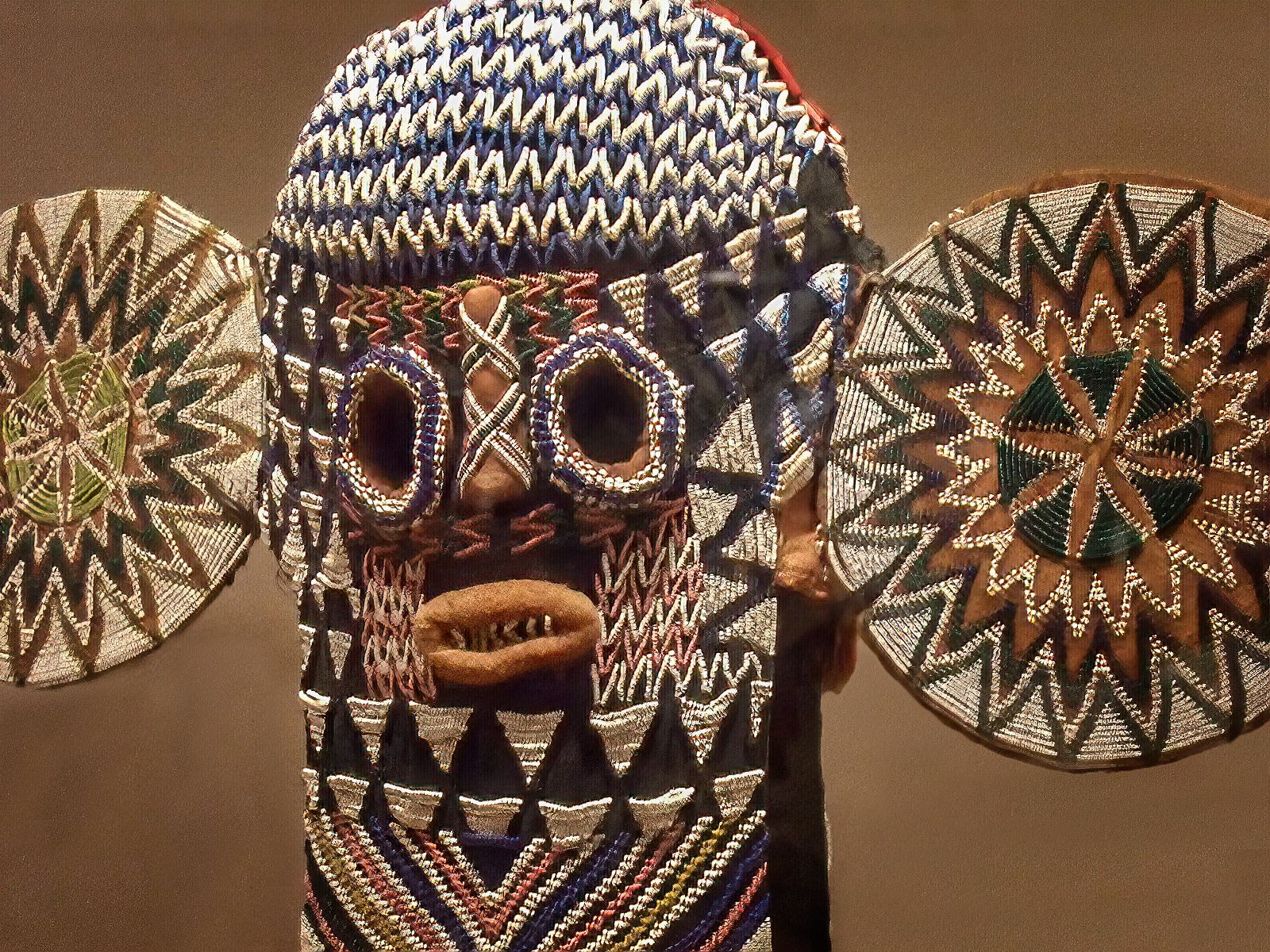
Beadwork is the other great art of the Grassfields. Imported glass beads and cowrie shells were once signs of wealth and royal favour, and they cover thrones, stools, calabashes, figures and masks. Some of the most striking objects are the beaded elephant masks of the Bamileke, worn by members of societies linked to the chief during dances, with long panels of cloth and large round ears covered in beads.
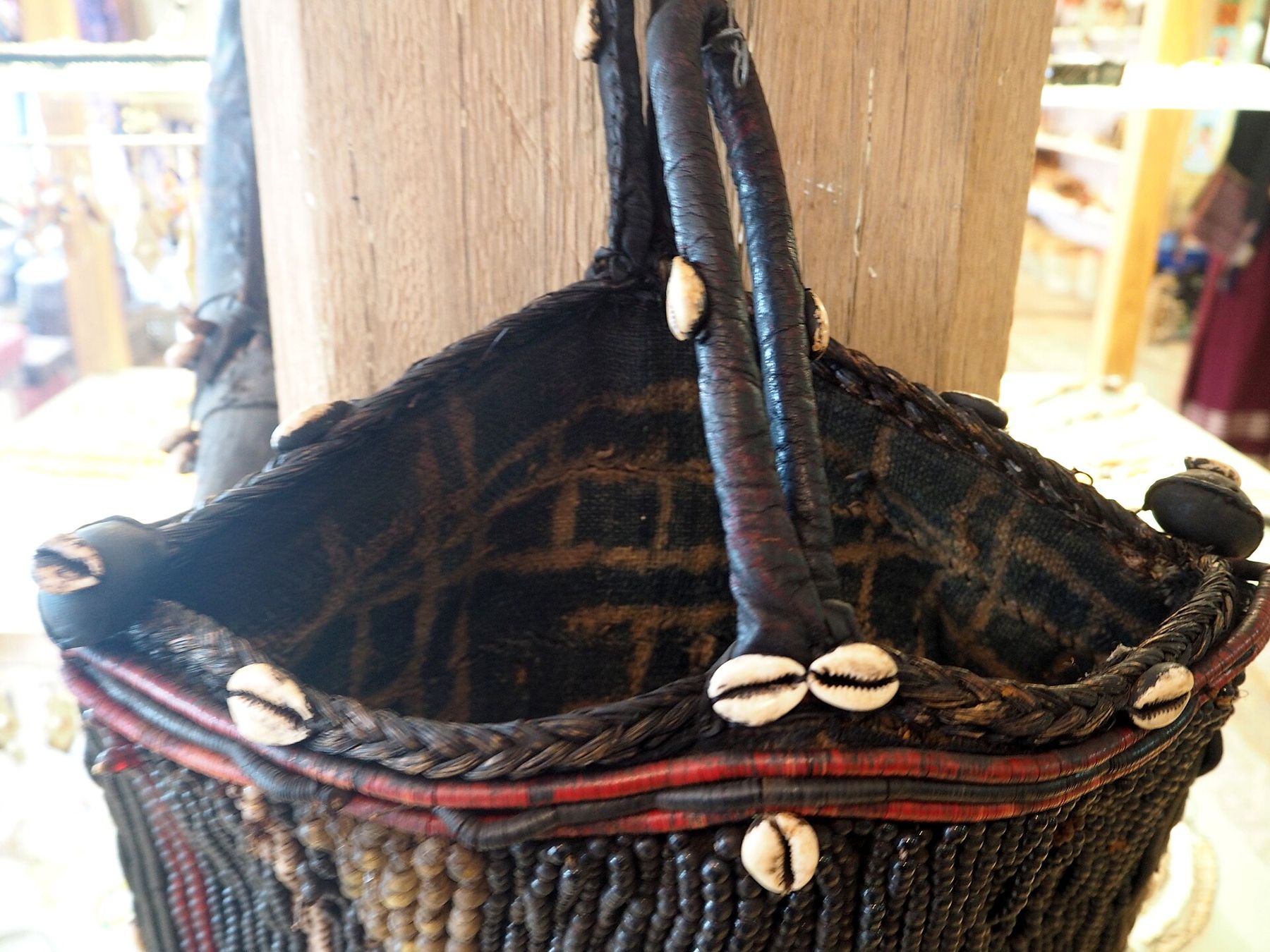
Bags, too, carry the same skills: men traditionally carried raffia bags covered in beads over the shoulder, and some are lined with indigo cloth. Wood carving, bronze casting and pottery complete the picture, with Foumban well known for its carvers and bronze casters.
Buying responsibly Acheter de façon responsable
The best place to buy is directly from makers or from shops and stalls run by artisans in craft towns such as Foumban, Bafoussam and Bamenda. Ask who made a piece, where and how. Hand-stitched, hand-dyed ndop takes a long time to make and costs more than factory prints, so a very low price usually tells you what you are looking at.
Bargaining is normal, but keep it friendly and remember that a small saving for you may be a large part of a maker's income. Be cautious with anything sold as old, used in ceremonies or taken from a palace. Objects with ritual meaning belong to their communities, and genuine antiques may not be legally exported.
Taking pieces home Rapporter des pièces chez soi
Cameroon has rules on exporting cultural objects, and some items need an export permit; ask the seller for a receipt and check the current rules before you buy anything valuable. Your own country may also have rules on importing items made with animal products such as ivory, certain skins or feathers, so avoid these altogether.
Indigo cloth is easy to pack and travels well. Wash new cloth separately, as the dye can run. For the regions where these crafts come from and the current security picture, especially in the Northwest, see the Ring Road of the Northwest and planning a trip to Cameroon.