The Grassfields / Les hauts plateaux
The Ring Road of the Northwest
A loop of highland roads around Bamenda passes royal palaces, crater lakes and cool montane forest. It is among Cameroon's finest landscapes, and the region has been in conflict since 2016.
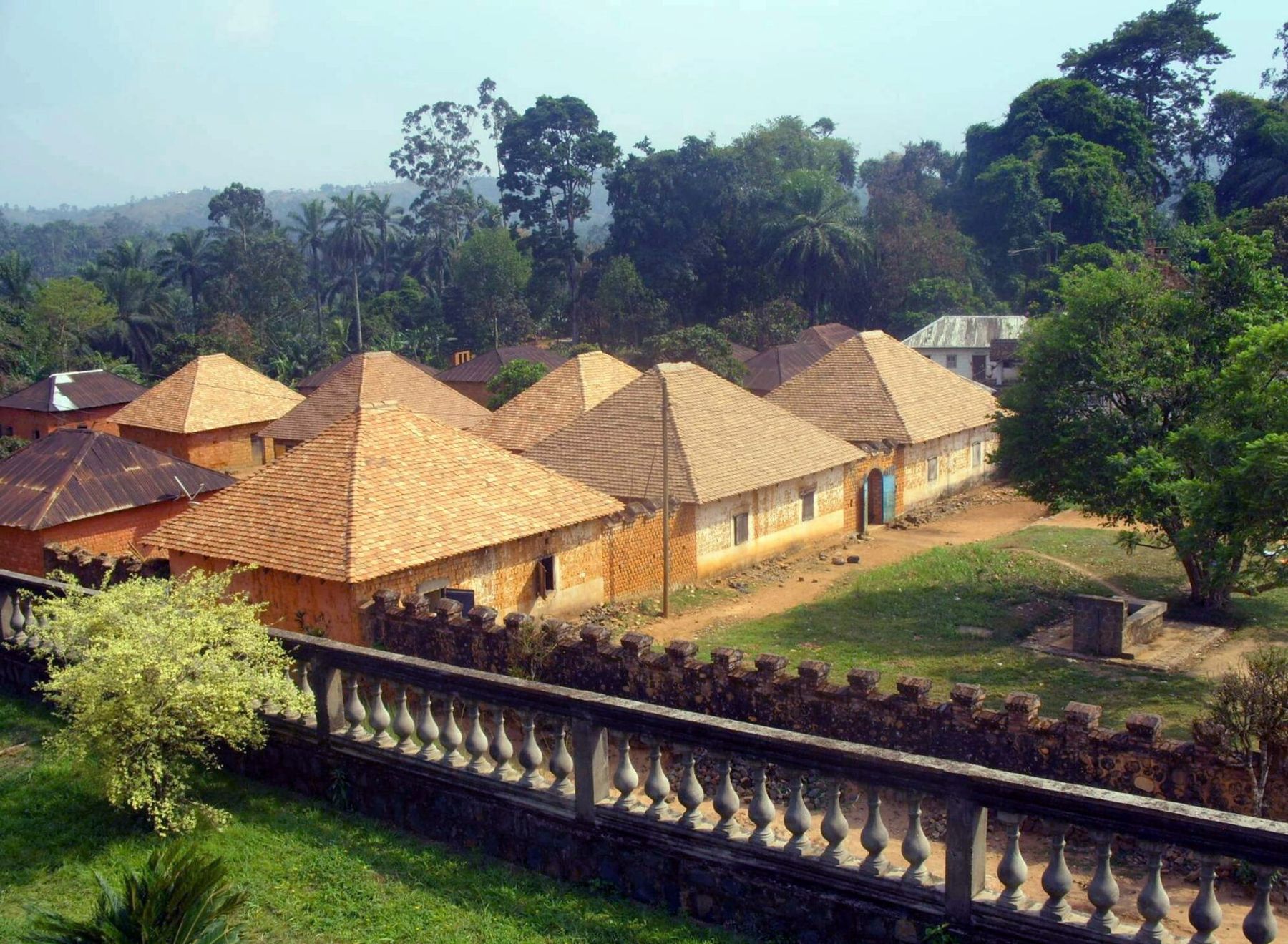
The Ring Road is a loop of roads, roughly 360 km long, that circles the Bamenda Highlands of the Northwest Region. It climbs over grassy ridges and through valleys of farms, past royal palaces, crater lakes and patches of montane forest. For years it was the classic overland journey in English-speaking Cameroon. Since 2016, the region has been at the centre of an armed conflict, and that changes everything about how, and whether, to travel there.
Do not rely on old travel accounts or on reports that an area has become calm; the situation can change quickly and differs from one place to another.
The security situation, told plainly La situation sécuritaire, en toute clarté
The Anglophone crisis began in 2016 with protests by lawyers and teachers in the Northwest and Southwest, and it turned into an armed conflict between separatist groups and government forces. There have been killings, kidnappings, burned villages, curfews and lockdowns, and large numbers of people have been forced from their homes, with schools and health services badly disrupted. Many foreign governments have advised against all travel to the Northwest for several years.
Check your government's current travel advice for the Northwest Region before you plan anything, and follow it. Do not rely on old travel accounts or on reports that an area has become calm; the situation can change quickly and differs from one place to another. If travel does become possible, go only by day, with trusted local contacts, and keep your plans flexible. The rest of this guide describes the region as it is, for readers planning carefully for the future.
A highland loop Une boucle sur les hauts plateaux
The Bamenda Highlands are part of the Grassfields, the volcanic uplands that run across western Cameroon. They are cooler and greener than the lowlands, with rolling grassland, eucalyptus groves and farms on steep slopes. The loop links Bamenda with towns such as Ndop, Kumbo, Nkambe and Wum, each the centre of its own area and fondom, the local kingdom ruled by a fon.
Large parts of the road are unpaved or badly broken, and in the rainy season, roughly from the middle of the year to October, stretches become slow and muddy. The dry months from about November to February are the most practical for travel. Allow several days for the full loop, and expect slow progress.
East of Bamenda, the road crosses the Ndop plain, a wide valley of farmland and rice fields, before climbing towards Kumbo, the main town of Nso, one of the largest fondoms of the Grassfields. In the north, around Nkambe, the land opens into high grassland grazed by cattle, much of it herded by Mbororo Fulani pastoralists. The western side runs down through Wum towards lower, warmer country before turning back towards Bafut and Bamenda.
Nights in the highlands can be cold, especially in the dry season, and mist often hangs in the valleys in the early morning. Bring warm layers along with rain gear.
Before the conflict, the loop was usually travelled by shared taxi, minibus or hired car with a driver, stopping overnight in the main towns. Fuel, cash and mobile coverage can be scarce in remote stretches, so plan each day carefully if travel becomes possible again.
Detour / détourNdop cloth and the crafts of the GrassfieldsBamenda and Bafut Bamenda et Bafut
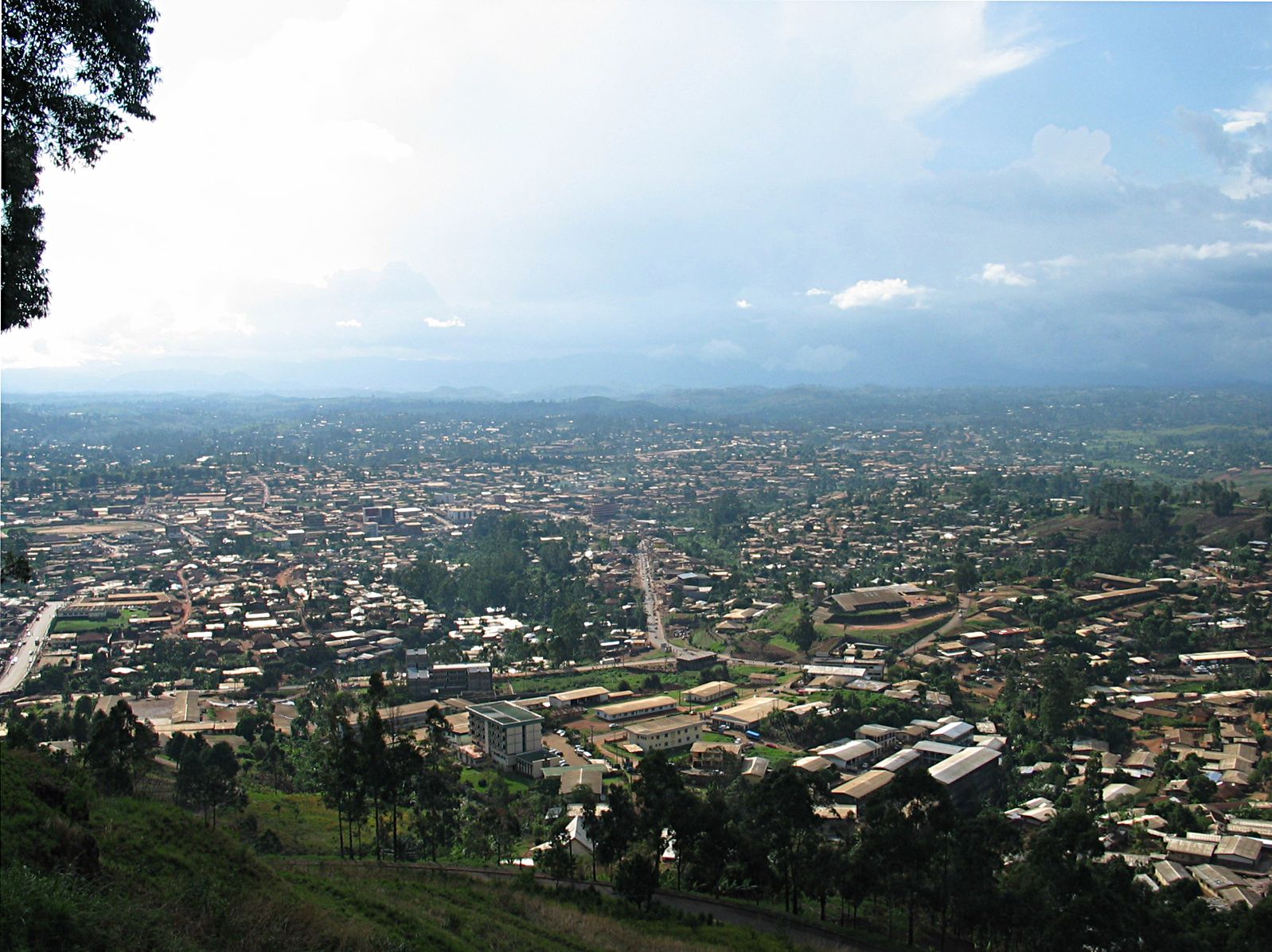
Bamenda, the regional capital, spreads across a valley below a steep escarpment. The upper part of town, Up Station, grew around a German administrative post and gives a wide view over the city. Bamenda is the gateway to the Ring Road, a market town and the main centre of English-speaking culture in the region.
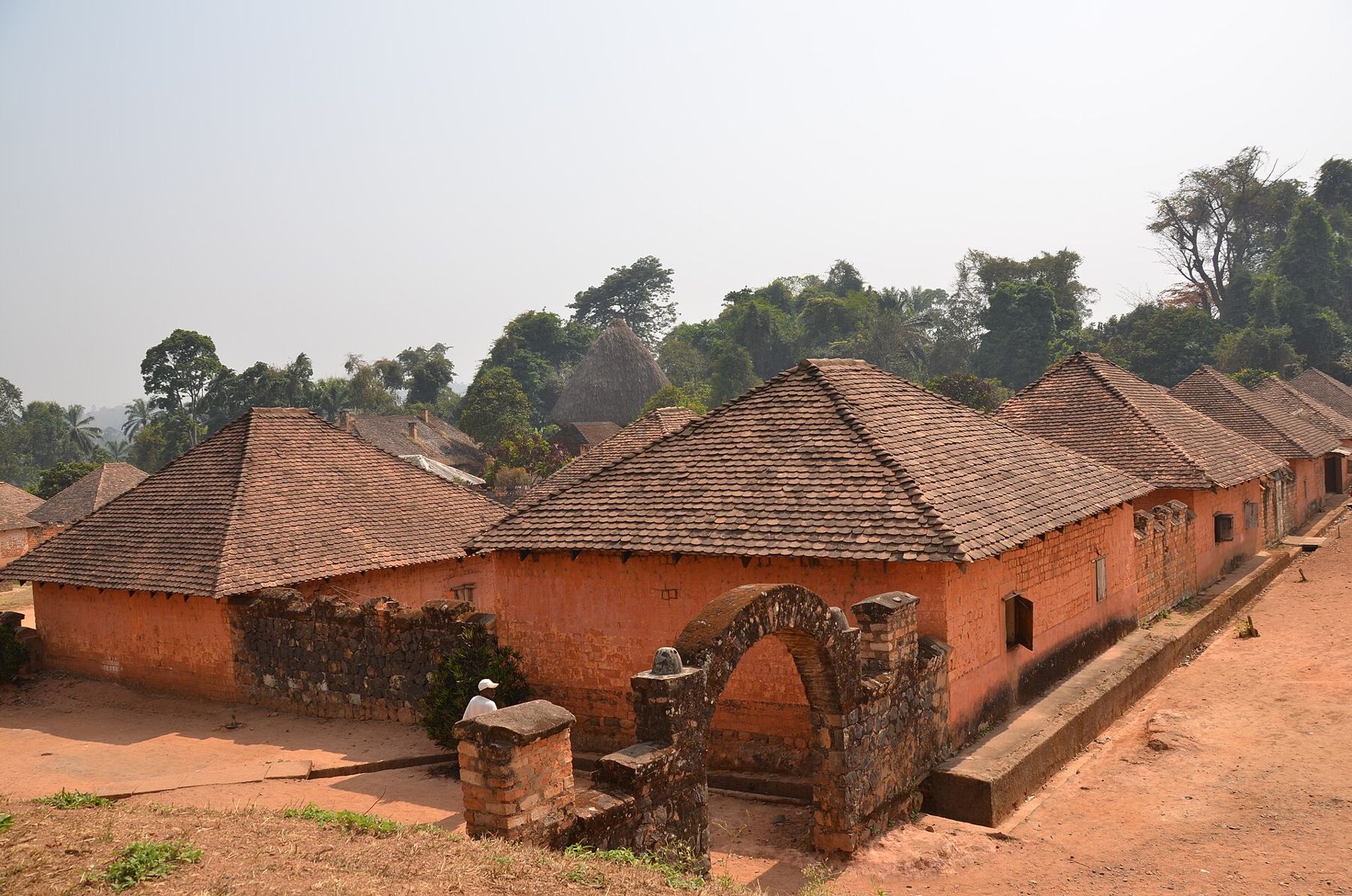
A short drive north, Bafut is the seat of one of the best-known fondoms of the Grassfields. Its palace compound holds brick buildings with steep tiled roofs from the early twentieth century, courtyards where the court gathers, and a tall shrine house with a high thatched roof that is central to the life of the fondom. The palace has long welcomed visitors, who are shown around by a guide from the court.
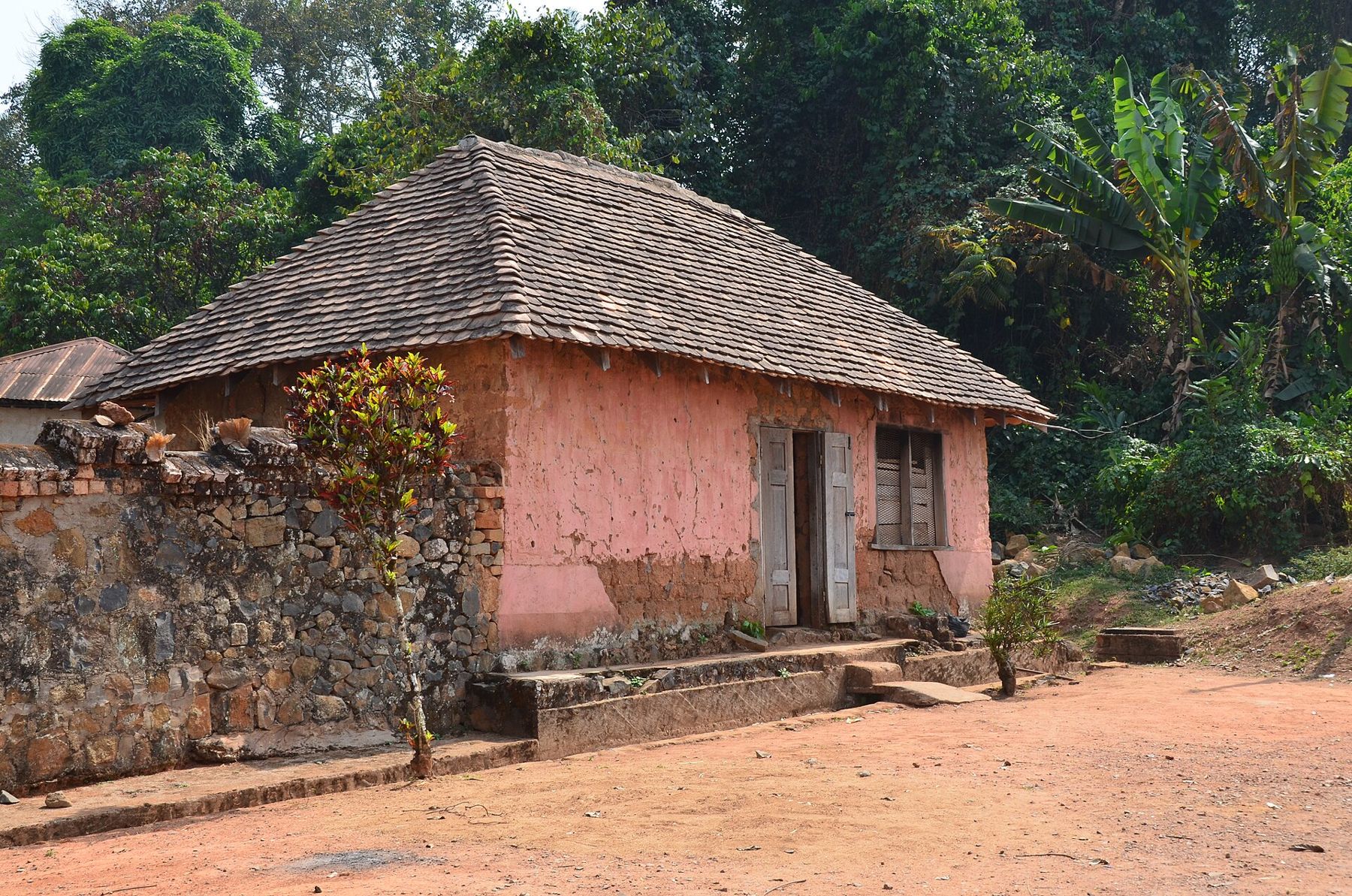
The architecture and the royal traditions here are related to those of the Bamum kingdom at Foumban and the Bamileke chiefdoms to the south, and the indigo cloth worn at court is covered in the guide to Ndop cloth.
Lakes and crater country Lacs et pays des cratères
The highlands are dotted with crater lakes left by old volcanic activity. Lake Awing, not far from Bamenda, is a quiet lake in a green bowl of hills. Further north, Lake Nyos is known for a tragedy: in 1986 it released a huge cloud of carbon dioxide that flowed down into the valleys at night and killed around 1,700 people and thousands of animals. Equipment has since been installed to release gas from the lake slowly. Many crater lakes have local traditions attached to them, so ask before swimming or fishing.
Oku and the montane forest Oku et la forêt de montagne
Mount Oku is the highest peak of the Bamenda Highlands, and its upper slopes hold some of the last montane forest in this part of Africa, known as the Kilum-Ijim forest. It is home to birds found nowhere else, including Bannerman's turaco. Lake Oku, a crater lake high on the mountain, sits in a ring of forest. Local communities have worked for years to protect the forest, which is also important for their honey, firewood and medicine.
Oku is also known for its white honey, produced by beekeepers in and around the forest, and for its own fondom, with a palace and traditions closely tied to the mountain. Walks in the forest have always been made with local guides, both for safety and because parts of it are sacred to the communities around it.
The palaces and their etiquette Les palais et leurs usages
The palaces of the Northwest are living royal courts. On arrival, greet the person who receives visitors, explain who you are, and wait to be shown around. Ask before photographing buildings, people or objects, and expect some areas, especially shrines, to be closed to outsiders. There is usually a fee for a visit; ask about it openly and pay it to the court official. If you are received by the fon, follow your guide's lead on how to greet him, and do not turn your back or sit before you are invited to.
English and Pidgin English are the main languages of the region. Carry cash, as cards are rarely accepted outside Bamenda, and check visas, health rules and the yellow fever certificate in planning a trip to Cameroon before you go.