The coast / Le littoral
Limbe, black sand under the mountain
Where Mount Cameroon runs down into the Atlantic, Limbe offers dark volcanic beaches, a garden planted in the German period and a centre caring for rescued gorillas and drills.
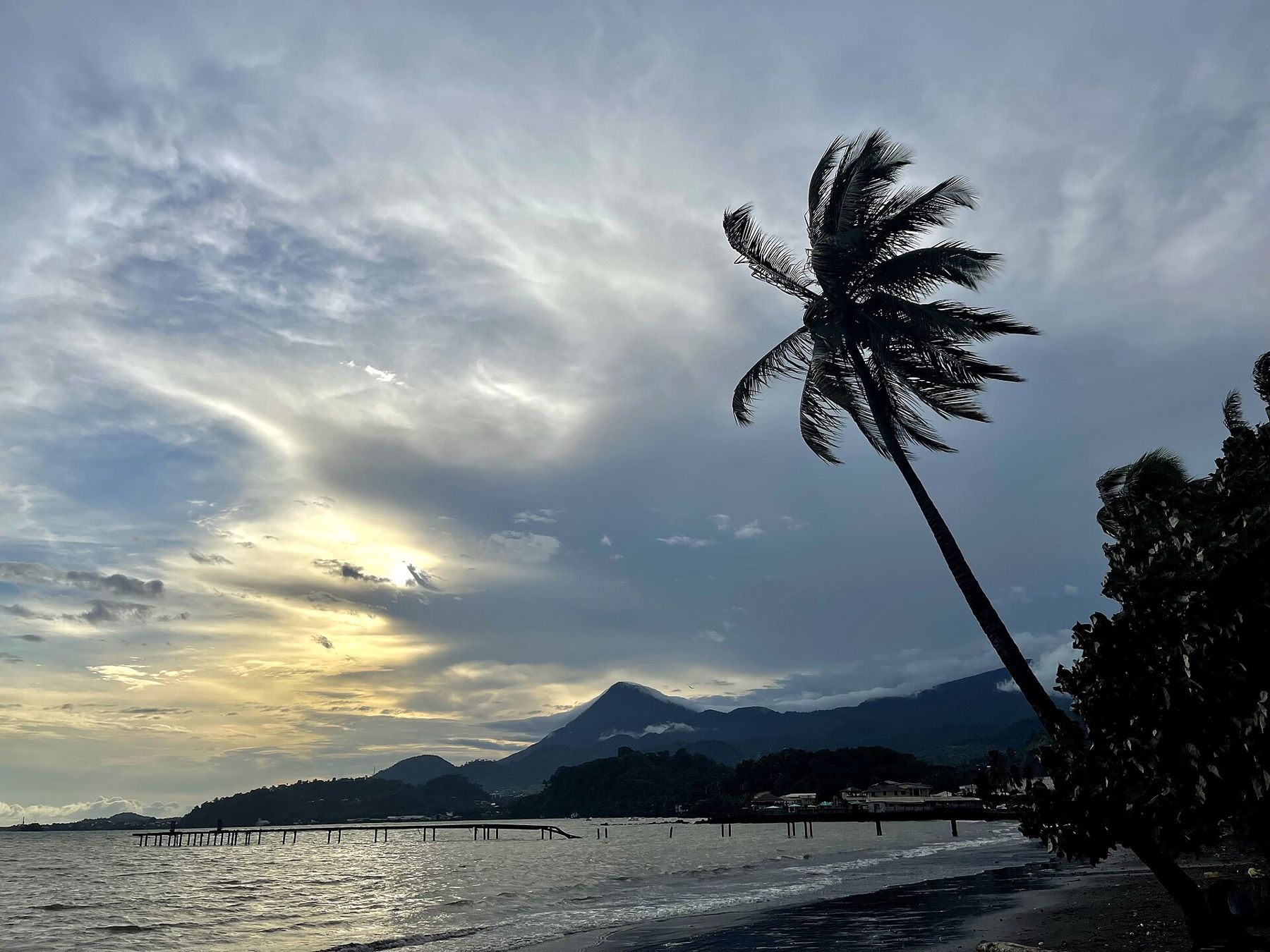
Limbe sits on a bay at the foot of Mount Cameroon, where the slopes of the volcano run down into the Atlantic and leave the shore covered in dark sand. By Cameroonian standards it is a small, unhurried town, with a fish market on the beach, a botanic garden laid out in the German period and a wildlife centre that cares for rescued primates. On a clear morning the mountain stands right behind the rooftops; on most afternoons it disappears into cloud.
On a clear morning the mountain stands right behind the rooftops; on most afternoons it disappears into cloud.
Where the mountain meets the sea Là où la montagne rencontre la mer
The town began as Victoria, a mission settlement founded in 1858 by English Baptists who had to leave the island of Bioko. It kept that name through the German and British periods and became Limbe in 1982. Older residents and many maps still use both names, so do not be surprised to hear Victoria in conversation.
The coast here is shaped by the volcano. Old lava flows reach the sea in several places west of town, and in 1999 an eruption sent lava across the coast road near Bakingili, where the cooled flow is still plain to see. Rain is part of life: the slopes facing the ocean catch the monsoon winds, and the area around Debundscha, further west, is counted among the wettest places in Africa. Even in the drier months, pack a light rain jacket and expect the odd downpour.
The black beaches Les plages noires
The sand along this stretch of coast is grey to black, ground down from volcanic rock. It heats up quickly in the sun, so sandals are more useful than you might think. The beaches west of town are often called by their distance along the road, and you will hear people speak of Mile 6 or Mile 11 rather than of a beach name. Some stretches are public and busy with families at weekends; others lie in front of private properties that charge for access. Ask locally which beaches are open to everyone.
The Atlantic can be rougher than it looks. Currents are strong in places, lifeguards are rare, and rocks from old lava flows sit just below the surface at some points. Swim where local people swim, stay close to shore, and keep out of the water after heavy rain, when rivers carry branches and rubbish into the bays.
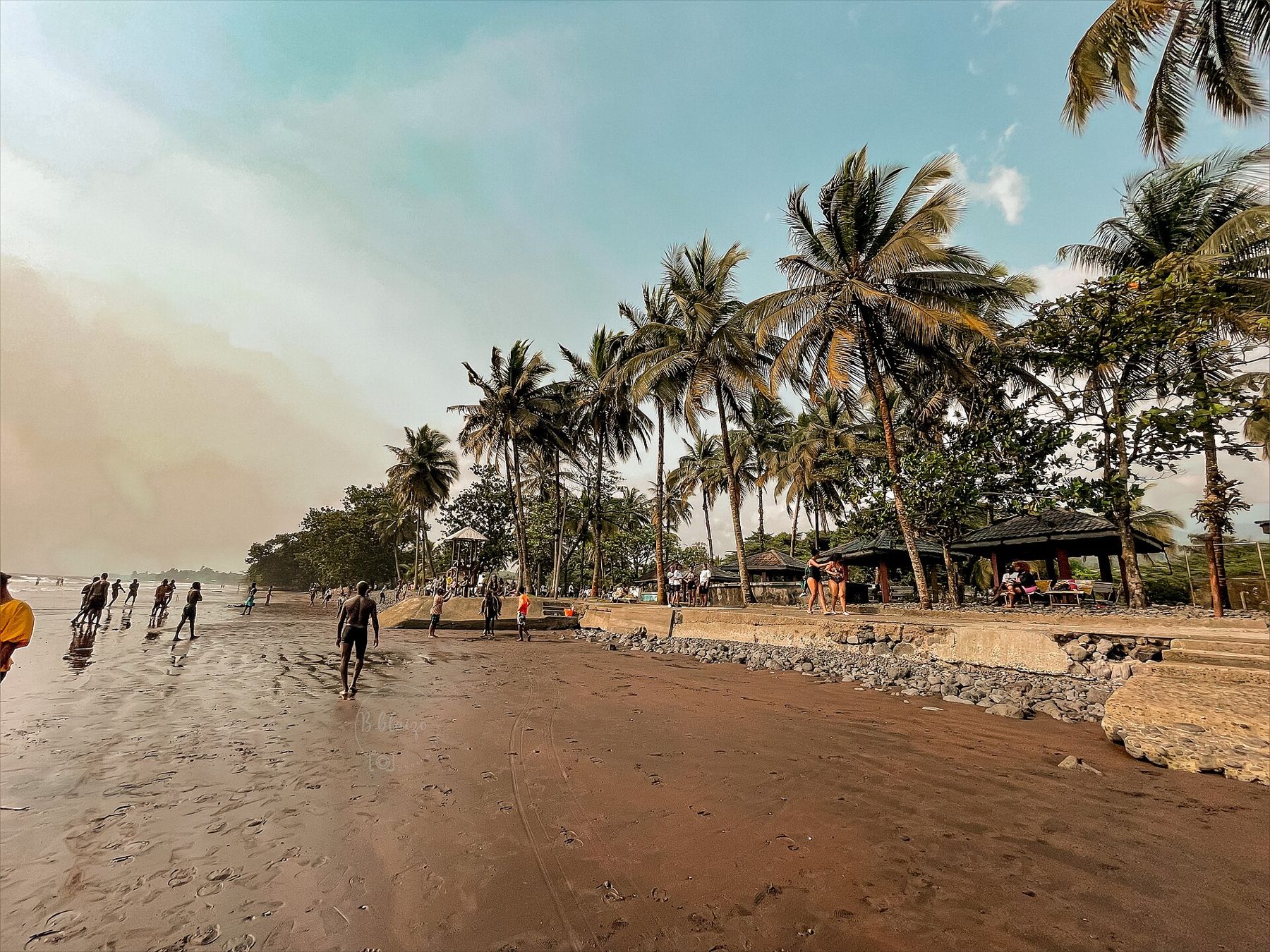
In town, Down Beach is where the fishing canoes come in. In the late afternoon the catch is laid out, and simple stalls grill fish over charcoal to eat with plantain, cassava sticks or a hot pepper sauce. It is one of the best places in the country to try grilled fish eaten by the water. Fish is usually priced by size, so agree on the price before it goes on the fire.
The botanic garden Le jardin botanique
The Limbe Botanic Garden was laid out by the German colonial administration in 1892 as a trial garden for crops such as cocoa, coffee, rubber, bananas and oil palm. Seedlings raised here went out to plantations across the territory, and the lower slopes of the mountain are still covered with estates that began in that era. Today the garden is a calmer place, around fifty hectares of lawns, old trees and riverbanks, crossed by the Limbe River on its way to the sea.
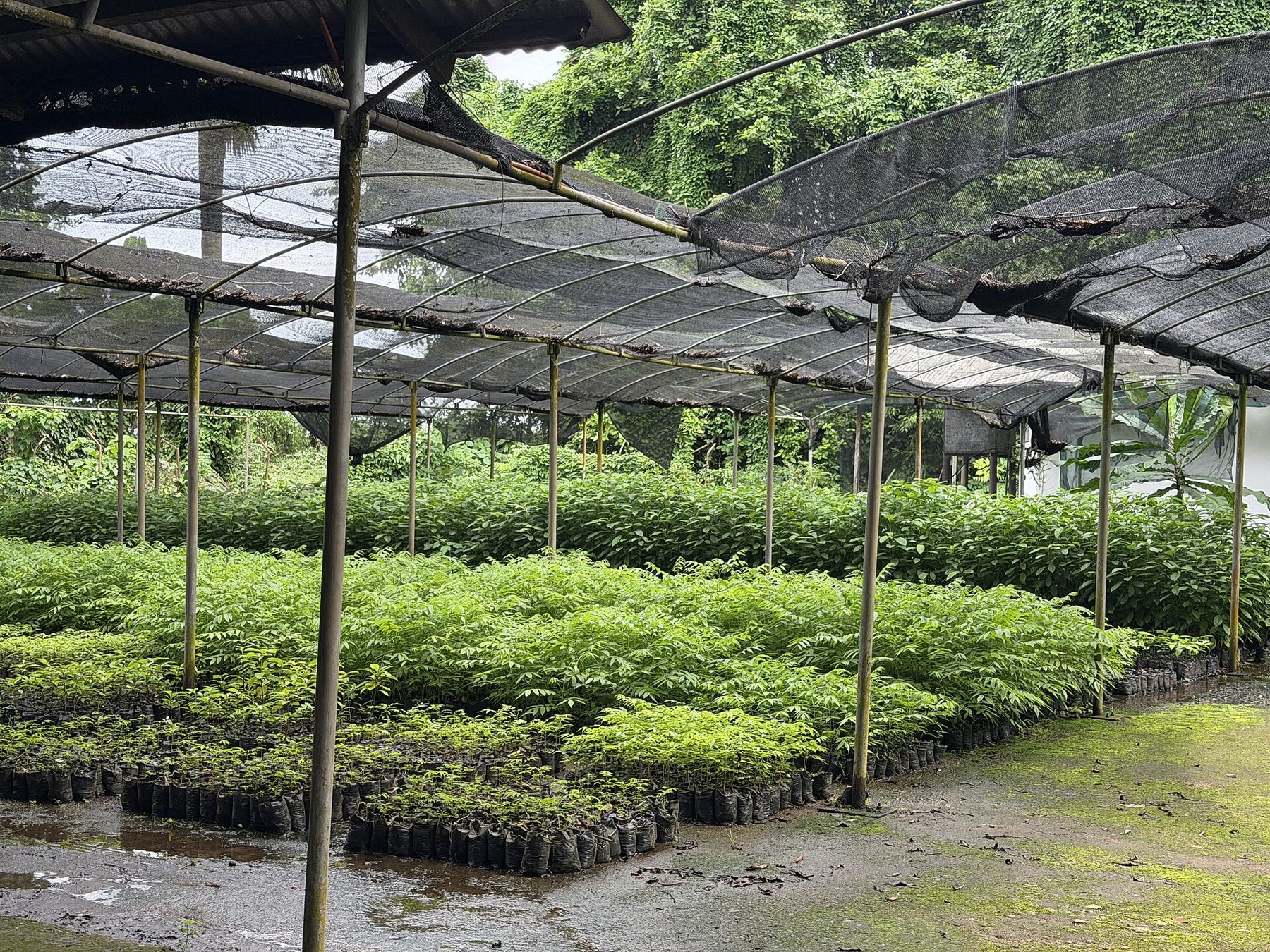
Paths lead past tall forest trees, palms and a nursery where young trees are grown for replanting. Birdlife is good in the early morning, before the heat builds. There is usually a small entry fee, and garden staff can sometimes walk you round and name the plants; check the current arrangements at the gate.
Detour / détourClimbing Mount Cameroon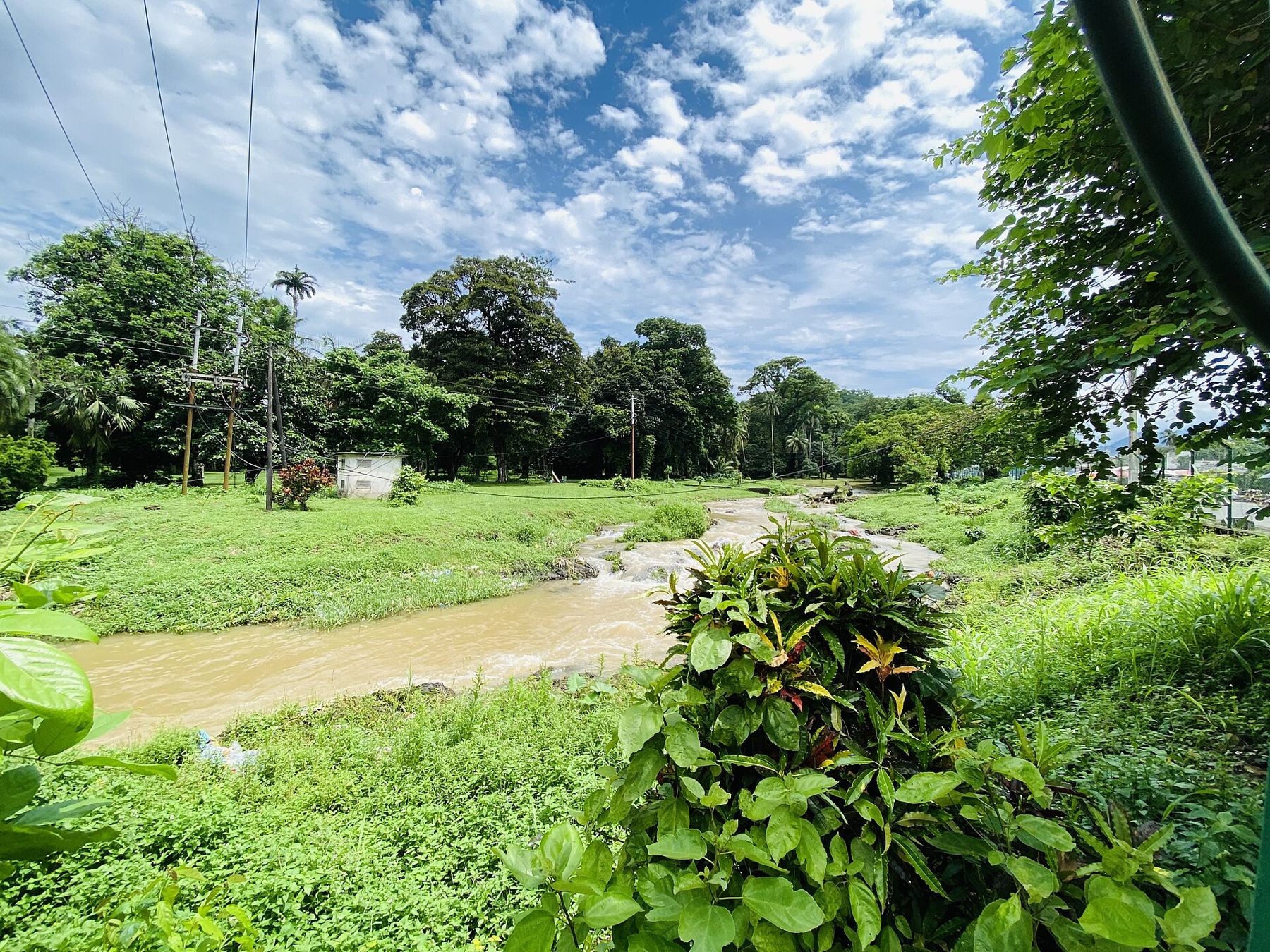
The wildlife centre Le centre pour la faune sauvage
Close to the garden, the Limbe Wildlife Centre looks after animals taken from the bushmeat and pet trades: gorillas, chimpanzees, drills and other monkeys, along with tortoises, birds and smaller mammals. Many arrive as orphans after their mothers were killed by hunters. The centre is not a zoo in the usual sense; its work is rescue, long-term care, education and, where possible, a return to the wild.
A visit is a quiet way to learn about the species that live in the rainforest reserves of the south and about the pressures they face. Keep your voice low, never feed the animals and follow the keepers' instructions. The centre sets its own visiting times and charges, which change, so confirm them before you set out. Your entry fee supports the work.
The centre also runs education programmes for schools and communities, explaining why hunting protected species is illegal and how the forest supports local life. If you are interested in volunteering or longer stays, ask the centre directly about what is possible, and avoid any offer that lets visitors handle the animals.
Oil, fish and an old name Pétrole, poisson et un ancien nom
Limbe is also a working town. The national oil refinery stands on the coast just outside it, offshore oil has long shaped local jobs, and the port area has a busier, more industrial feel than the beaches. Fishing remains central to daily life, and the plantations on the lower slopes, mostly palm oil, rubber and bananas, employ many people from across the region.
A short trip east along the coast leads to Bimbia, where the remains of a site linked to the Atlantic slave trade are kept as a place of memory. It is a sober visit, best made with someone from the local community who can explain what happened there. Back towards the mountain, the hill town of Buea is less than an hour away by road and makes a cooler base for exploring the slopes.
Getting there and staying safe Y aller et rester prudent
Limbe is about 70 km from Douala on a tarred road through Tiko, and shared taxis and buses run between the two. Most international visitors fly into Douala, the port city across the estuary, and many visit Limbe as an overnight trip from there.
Security needs plain words. Since 2016 the Southwest and Northwest regions have been affected by the Anglophone crisis, a conflict between armed separatist groups and government forces. There have been attacks, kidnappings and lockdowns in parts of the Southwest, and the situation changes. Before planning a trip, check your government's current travel advice for the Southwest Region and follow it. If you do go, travel by day, carry your passport for checkpoints, stay informed through local contacts and keep your plans flexible.
Money is in CFA francs, cards are accepted in few places, and cash machines can run dry, so carry enough cash in small notes. Entry rules, visas and the yellow fever certificate requirement apply as for the rest of the country; check before you go.