The Grassfields / Les hauts plateaux
Foumban and the Bamum sultans
Foumban has been the seat of the Bamum kingdom for centuries. Its palace, museum and craft street tell the story of a dynasty and of a king who invented a script for his people.
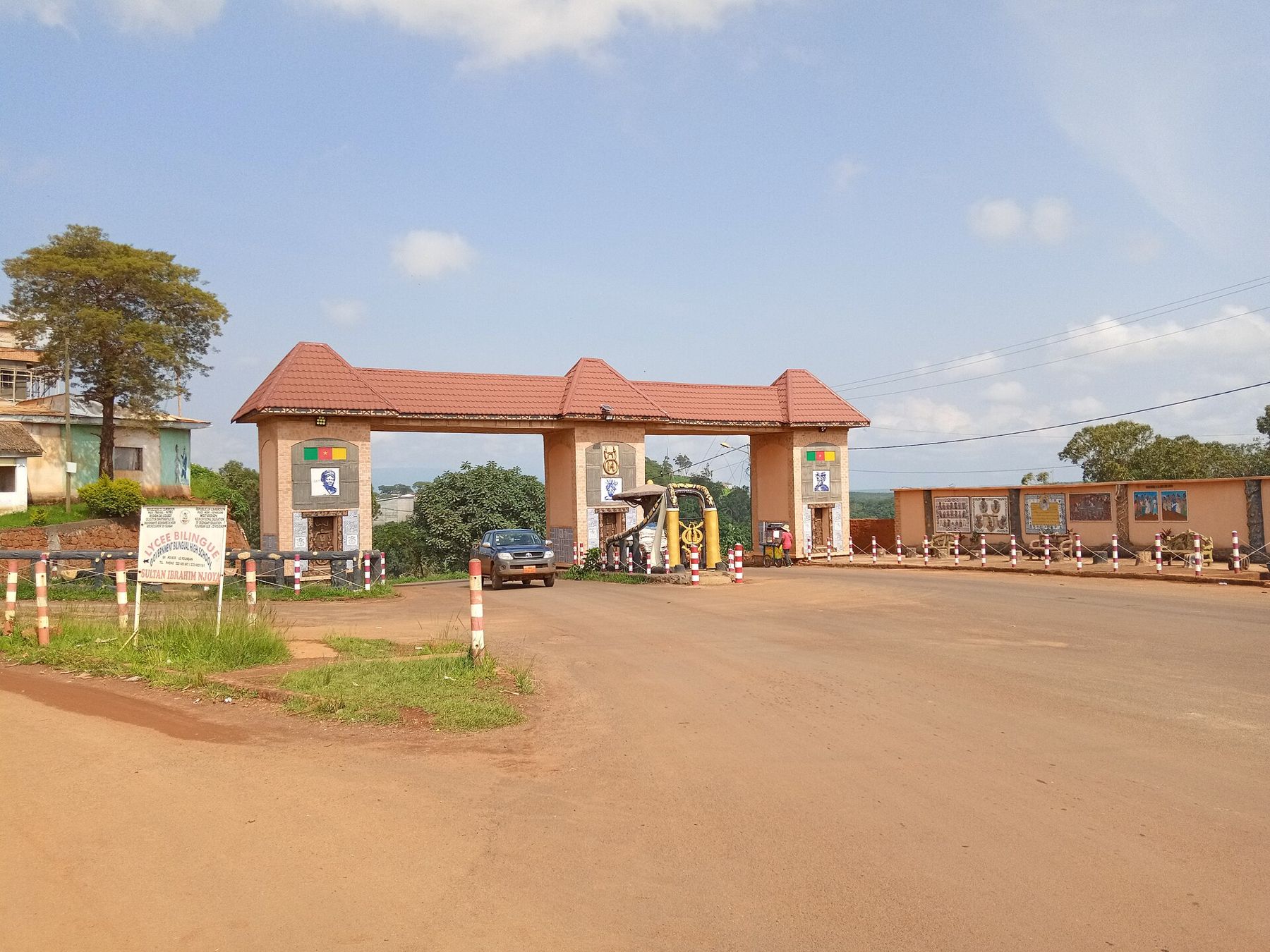
Foumban sits on the high plateau of the West Region, in rolling country of farms, eucalyptus and red earth. It is the royal town of the Bamum people, ruled by a dynasty whose kings, now known by the title of sultan, have reigned here for centuries. For visitors, Foumban offers one of the richest cultural experiences in Cameroon: a palace, a museum full of royal treasures, a working craft quarter and a remarkable chapter in the history of writing.
Few places in the world can show you a writing system invented within living memory of its users' grandparents.
A royal town on the plateau Une ville royale sur le plateau
The Bamum kingdom traces its origins to a founder who settled in the area in the late fourteenth century, and the list of rulers since then is kept with great care. Over time, the kingdom grew into one of the most powerful states of the Grassfields, the highland region it shares with the Bamileke chiefdoms to the west and the fondoms of the Northwest.
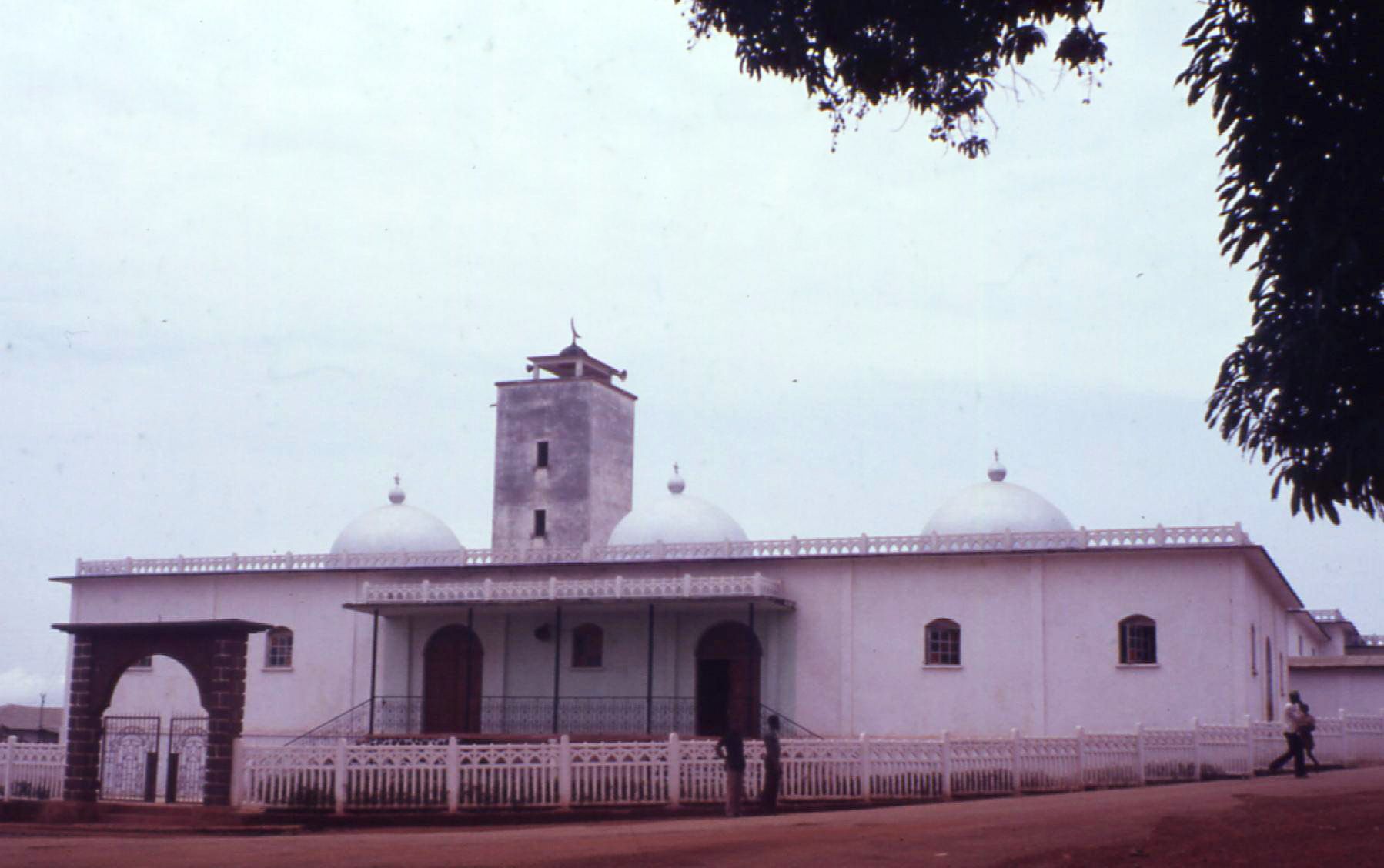
Islam reached the Bamum court in the late nineteenth century, and the ruler adopted the title of sultan. Today Foumban is largely Muslim, with Christian communities too, and the great mosque faces the palace across the central square. The town is busiest on Fridays, after the midday prayers, when people gather in the square.
The market is lively too, with farmers from the surrounding hills selling maize, beans, groundnuts and vegetables, and traders offering cloth, pots and household goods. The plateau is cooler than the coast, especially at night, and the dry months from about November to February bring dust but clear roads.
Njoya's palace Le palais de Njoya
The most famous of the Bamum kings is Ibrahim Njoya, who reigned from the late nineteenth century until the French colonial authorities stripped him of his powers in the 1920s. They sent him into exile in Yaoundé in 1931, and he died there in 1933. Njoya was a reformer, an inventor and a patron of the arts. He met the German colonial officers who arrived in the early 1900s with a mix of caution and curiosity, and he borrowed ideas from them as readily as from his own tradition.
The palace he built in the years around the First World War is a large brick building of several storeys, with long galleries and decorated wooden balconies. Its style mixes local and European influences, a sign of a ruler who wanted to show his kingdom as modern and strong. The palace is still the seat of the sultan, so parts of it are private, and visits follow the rules set by the court.
A king who invented a script Un roi inventeur d'une écriture
Njoya's best-known achievement is the Bamum script. Starting in the 1890s, he and his advisers created a system of signs for writing the Bamum language. The first version had hundreds of picture-like signs; over the following years it was simplified several times into a much smaller set of signs that stood for syllables. Njoya used it to record the history and customs of the kingdom, laws, medicine and even a map of his territory, and he opened schools to teach it.
The script fell out of daily use after Njoya's exile, as French became the language of schools and administration. It has never vanished, though. Manuscripts survive in the royal collections, and efforts to teach and preserve the script continue. Few places in the world can show you a writing system invented within living memory of its users' grandparents.
Detour / détourThe chiefdoms of the Bamileke plateauThe museum and the royal collections Le musée et les collections royales
The Bamum dynasty has long kept a collection of royal objects: thrones decorated with beads and cowries, carved posts, masks, weapons, musical instruments, ceremonial clothing and documents in Njoya's script. A newer museum building, designed around emblems of the kingdom such as the double-headed serpent and the spider, now presents the collections. Displays explain the line of kings and the role of the court in Bamum society.
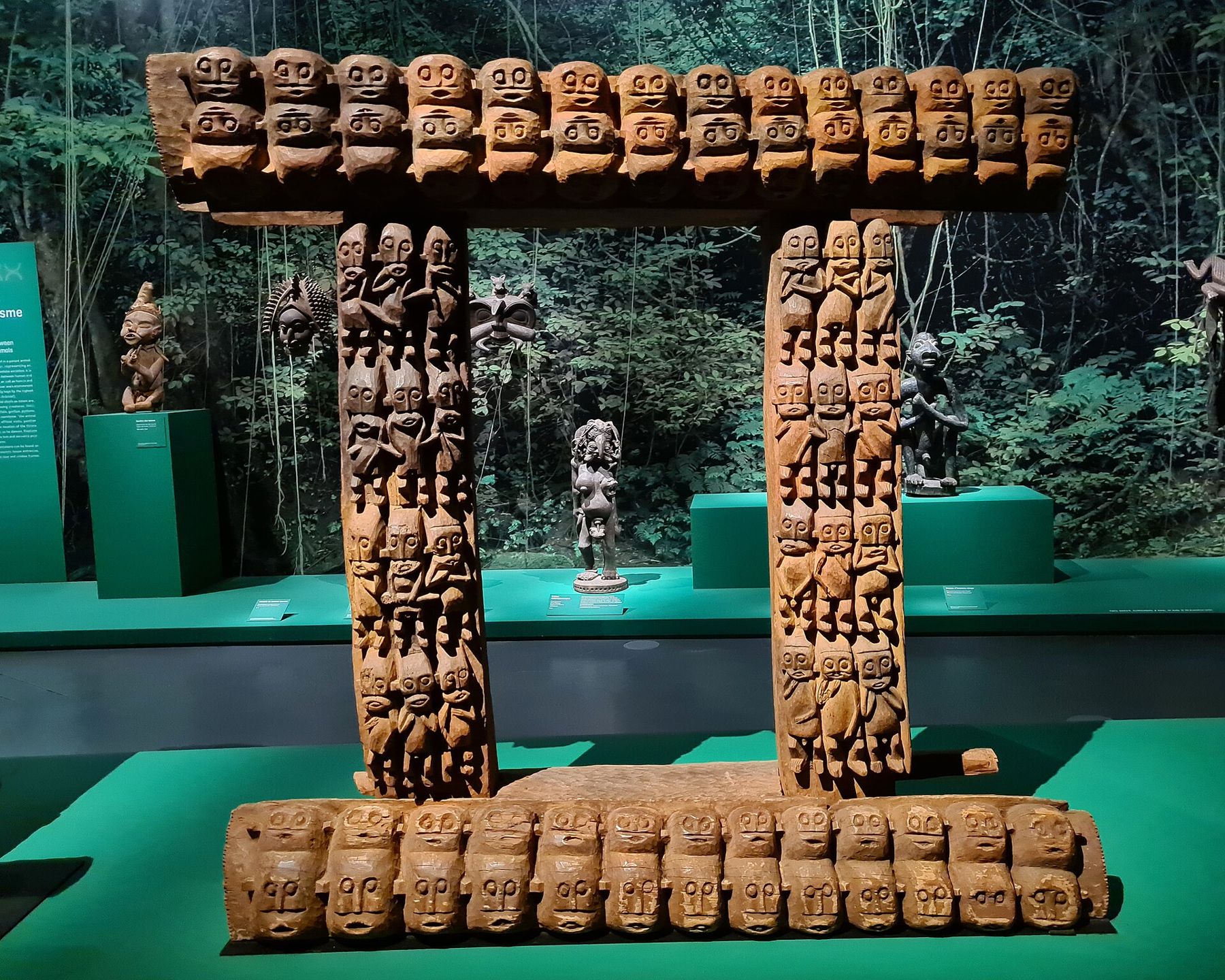
Many Bamum objects left Cameroon in the colonial period and are now in museums in Europe and North America. Seeing what remains in Foumban, in the place it was made for, gives a different sense of the work than a museum case abroad. Opening hours, ticket prices and rules on photography change, so check before you go; photography inside is often restricted.
For many years, part of the royal collection was displayed inside the palace itself, and the palace rooms remain part of the visit. Allow at least half a day for the palace and museum together, and more if you want to talk with the guides about the history of the dynasty.
The craft street La rue des artisans
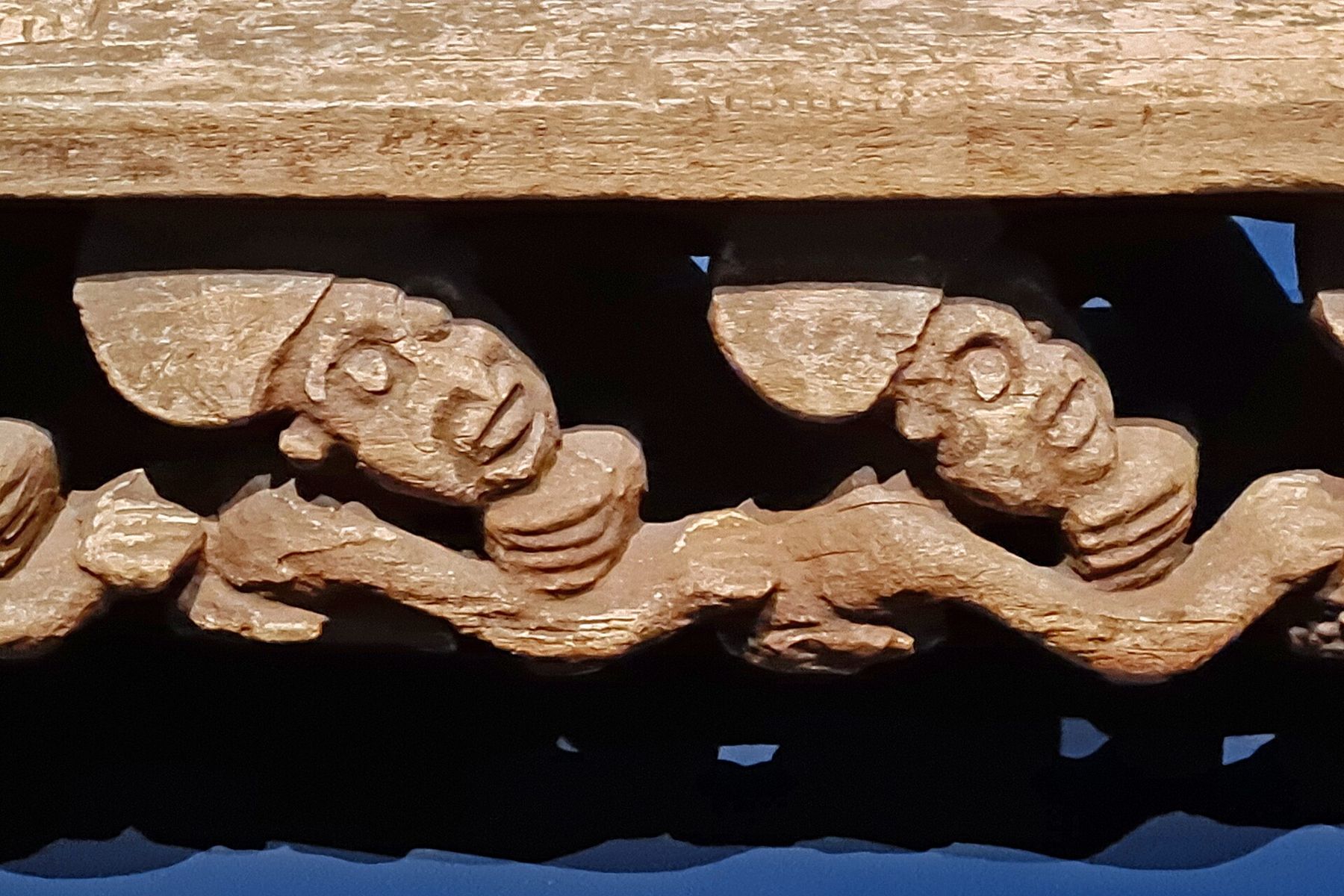
Foumban is known across Cameroon for its artisans. Along the craft street and in workshops around the town, sculptors carve wood, embroiderers work on gowns and caps, and bronze casters use the lost-wax method to make figures, masks and pipes. You can often watch the casters at work, building a model in wax, covering it in clay, melting the wax out and pouring in the hot metal.
Many families in Foumban have practised these crafts for generations, and the workshops are places of training as well as trade, with young apprentices learning beside older masters. Bargaining is normal, and polite patience works better than hard pushing. Ask makers how a piece was made and what it represents, and be wary of anything sold as old or as a sacred object; genuine antiques may not be legally exported, and you may need a permit for some items. See Ndop cloth and the crafts of the Grassfields for more on buying with care.
Visiting with respect Visiter avec respect
Foumban is a royal town with living traditions. Dress modestly, especially near the palace and the mosque, and ask before photographing people, the sultan's guards or any ceremony. There are usually fees for the palace and museum visits, and sometimes for photography; ask about them openly and pay them at the official desk.
The Bamum hold a major traditional festival, the Nguon, at which the people and the sultan renew their bond. It does not happen every year, and dates vary, so check before you go if you hope to attend. Foumban combines well with the chiefdoms of the Bamileke plateau around Bafoussam, and many visitors reach the region by road from Yaoundé or Douala. French is the language you will need, and cash in CFA francs is essential.