Before you go / Avant de partir
Eating in Cameroon
From bitter-leaf stew on the coast to grilled beef skewers in the north, Cameroon's food is as varied as its regions, built on plantain, cassava, groundnuts, palm oil and pepper.
A country of many kitchens Un pays aux mille cuisines
Cameroon is often called Africa in miniature, and its food shows why. The coast cooks with fish, shrimp and leaves; the forest with cassava, plantain and groundnuts; the Grassfields with cocoyam, beans and palm oil; the north with millet, maize, beef and milk. Each region has its dishes, and the cities mix them all.
Most meals pair a starch with a sauce. The starch might be plantain, boiled or fried; cassava in one of its many forms; rice; cocoyam; or a stiff porridge of maize or millet. The sauce carries the flavour, often built on groundnuts, palm oil, leaves, tomatoes, smoked fish and hot pepper. Pepper is usually served on the side, so you can add as much as you like.
Ndolé Le ndolé
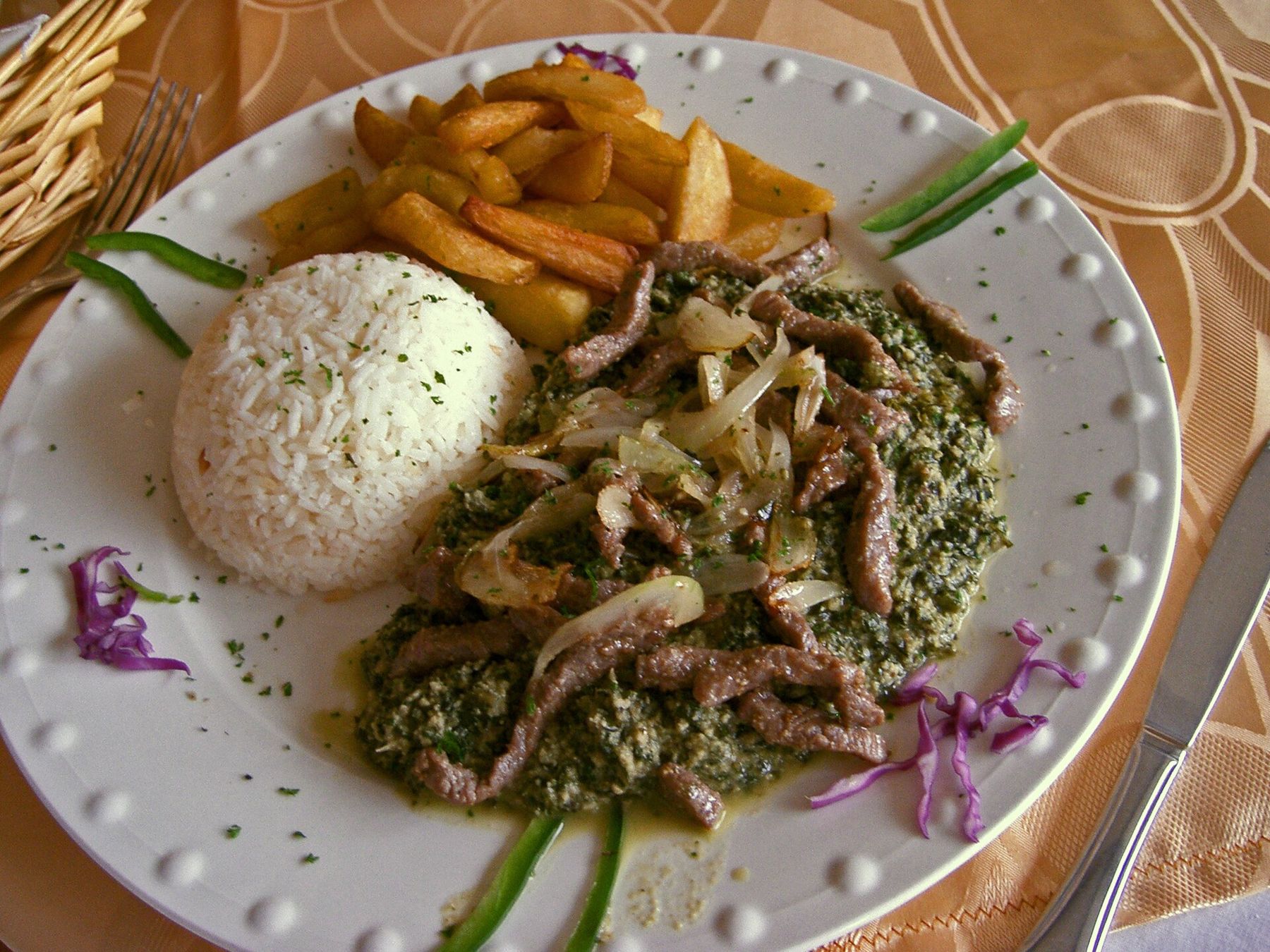
Ndolé is the dish most Cameroonians name first when asked about national food. It comes from the coast around Douala and is made with bitter leaves, washed and boiled several times to soften their bitterness, then cooked with ground peanuts into a rich green stew. Beef, shrimp, smoked fish or a mix of these go into the pot, and it is often finished with fried onions.
Ndolé is eaten with boiled or fried plantain, with rice, or with bobolo or miondo, sticks of fermented cassava wrapped in leaves. It is a dish for Sundays and celebrations as much as for everyday lunches, and every family has its own version.
Poulet DG and other city favourites Le poulet DG et d'autres classiques
Poulet DG takes its name from the "directeur général", the company boss, because it was once seen as a dish rich enough for one. Chicken pieces are fried, then cooked with ripe plantain, carrots, green beans, peppers, onions and tomato. It appears on the menus of many city restaurants and at parties.
Other dishes you meet often in the south include koki, a steamed pudding of black-eyed peas and palm oil; mbongo tchobi, a dark, spicy fish or meat stew coloured with charred spices; and sauces of groundnut or okra served with fufu, a smooth dough of cassava or maize. In the West region, kondrè is a plantain and meat stew cooked for festivals.
Detour / détourDouala, the working port city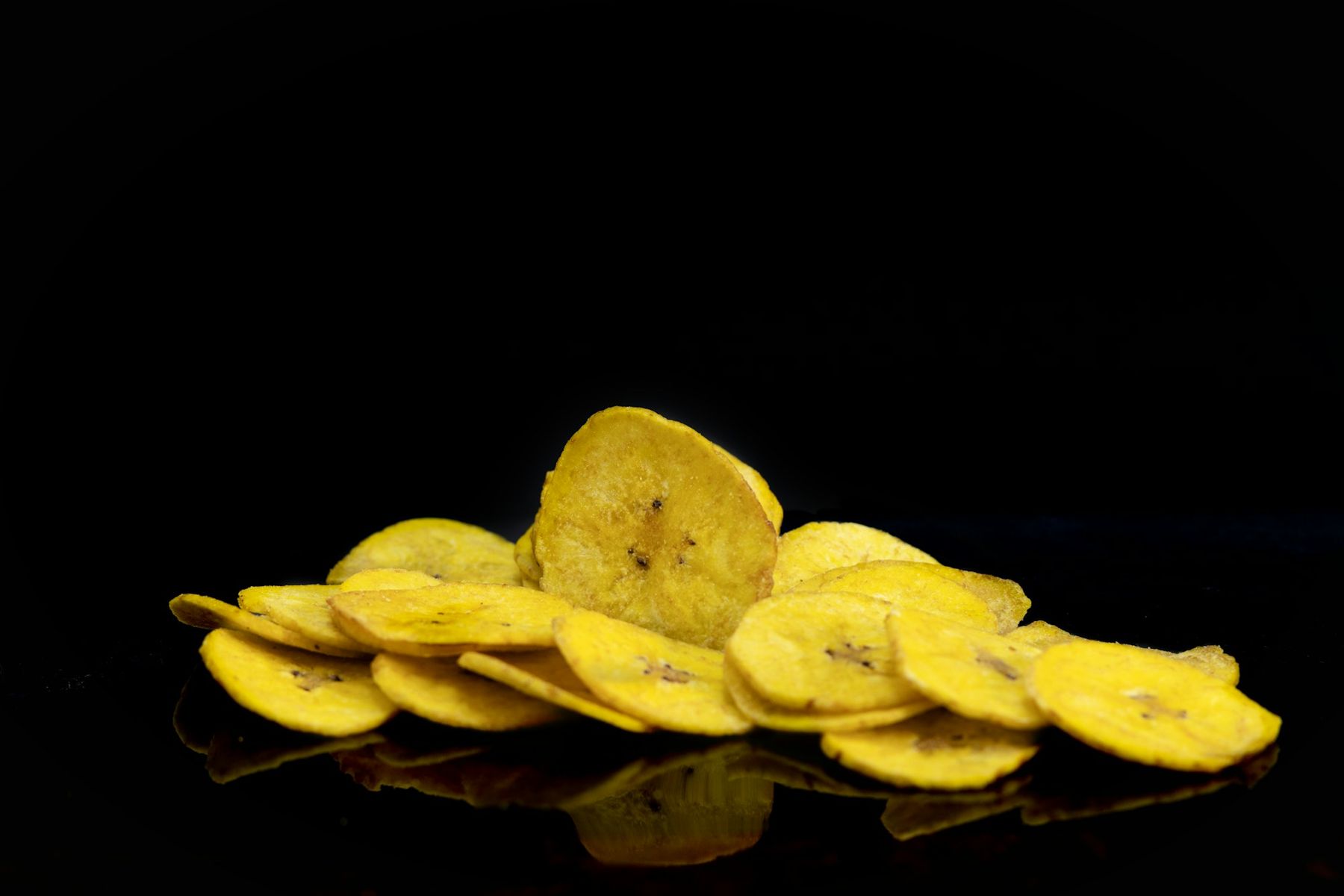
Grilled fish and the street Le poisson braisé et la rue
In the evening, many street corners in Douala, Yaoundé and the coastal towns fill with the smoke of grills. Whole fish, often mackerel, tilapia or carp, are marinated in a paste of pepper, garlic, ginger and herbs, grilled over charcoal, and served with bobolo, miondo, fried plantain or chips. You choose your fish, agree the price and wait at a table nearby while it cooks. On the coast at Kribi, fish comes straight from the boats.
Street snacks are everywhere. Puff-puff, small balls of fried dough, are sold in the mornings with beans and a thin porridge, a combination many people know by its initials, BHB, for beignets, haricots and bouillie. Roasted plantain and groundnuts, grilled corn, boiled eggs and fresh fruit are sold by the roadside and through bus windows. In the north, soya, thin skewers of beef rubbed with a spiced peanut powder and grilled, is the night-time favourite, as the Ngaoundéré and Adamawa story describes.
Dishes of the west Les plats de l'Ouest
In the Grassfields of the Northwest, achu is a festive dish: pounded cocoyam shaped into a mound with a well in the middle, filled with a yellow soup of palm oil, spices and limestone salt, eaten with the fingers. Eru, from the Southwest, is a dish of finely sliced eru leaves cooked with waterleaf, palm oil, smoked fish and meat, usually eaten with water fufu or garri, both made from cassava.
The West region has its own festive cooking linked to the chiefdoms, described in the chiefdoms of the Bamileke plateau. Plantains appear in every region, green or ripe, boiled, fried or roasted, and ripe fried plantain is the most common side dish in the country.
Drinks Les boissons
Palm wine, tapped from palm trees and drunk fresh, is sweet in the morning and stronger by the afternoon; in English-speaking areas it is often called matango. In the north, millet or sorghum beer is brewed at home. Foléré, a deep red drink made from hibiscus flowers, is sold chilled in plastic bags and bottles. Beer is popular everywhere, and soft drinks are easy to find.
Eating well and safely Bien manger en toute sécurité
Meals are often shared. At home and at many family-run eating places, food comes in large pots and plates for the table, and it is polite to accept what you are offered, even if only a little. In simple roadside eating houses, you usually choose from the pots of the day, pay at the end and eat at shared benches. Prices are low, menus are spoken rather than written, and the dishes on offer change with the market.
Choose busy stalls where food is cooked fresh and served hot. Drink bottled or treated water, and be careful with ice and raw salads until you are used to local food. Wash or sanitise your hands before eating, especially when you eat with your fingers, which is normal for many dishes; use your right hand. Ask before photographing vendors. For health requirements before travel, see the guide to planning a trip.